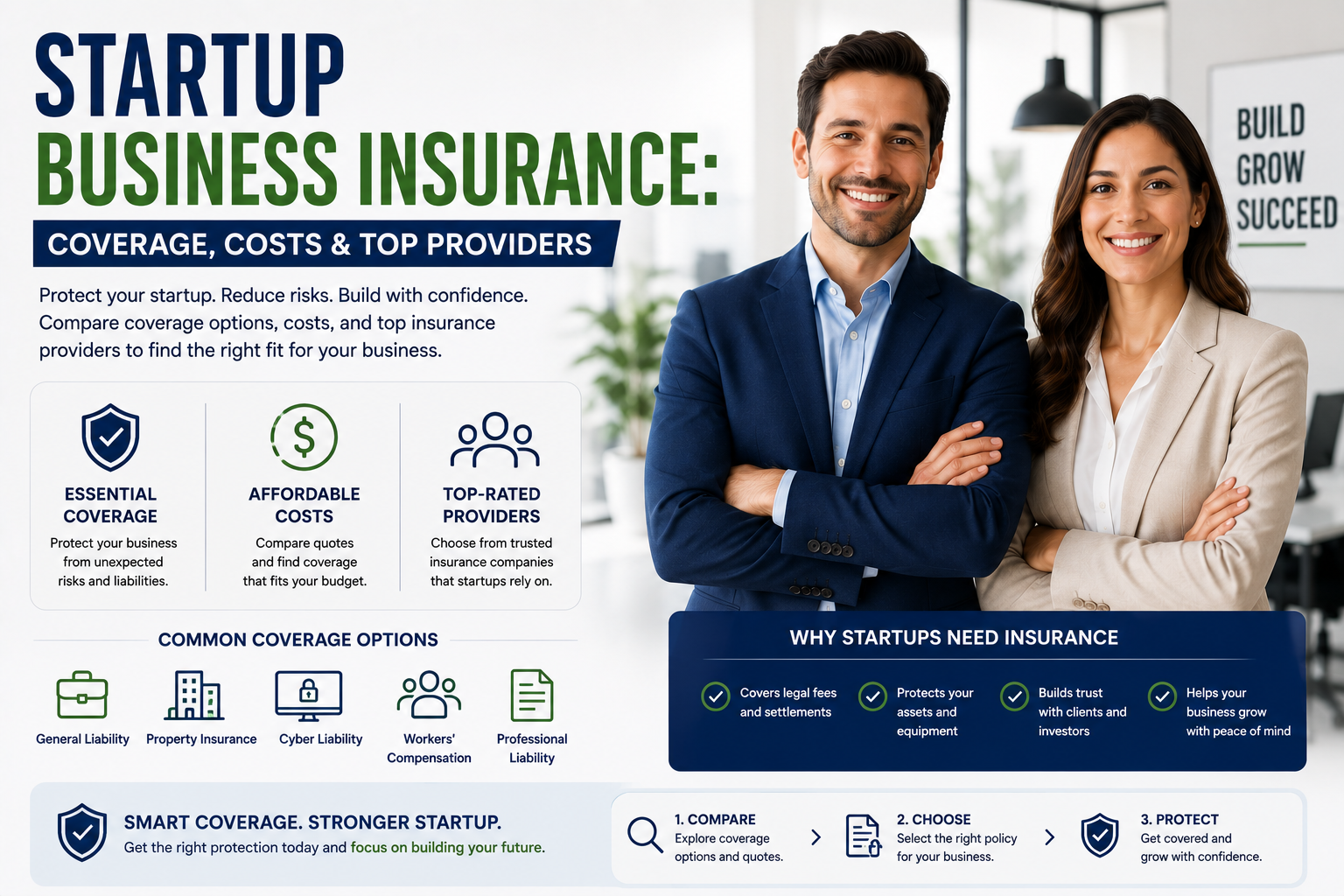
Startup business insurance helps new companies protect against financial losses resulting from lawsuits, property damage, cyber incidents, employee injuries, and other operational risks. Coverage needs vary by industry, business model, and growth stage. Comparing insurance providers and selecting appropriate policies can help startups manage risk while supporting long-term business growth.
Startup Business Insurance Essential Coverage for New Companies
Launching a startup involves significant uncertainty. While entrepreneurs often focus on funding, product development, and customer acquisition, managing risk is equally important.
Startup business insurance helps protect new companies from financial losses that could threaten operations during the early stages of growth. Whether you operate a technology startup, consulting firm, e-commerce company, or retail business, insurance can help safeguard assets and support long-term stability.
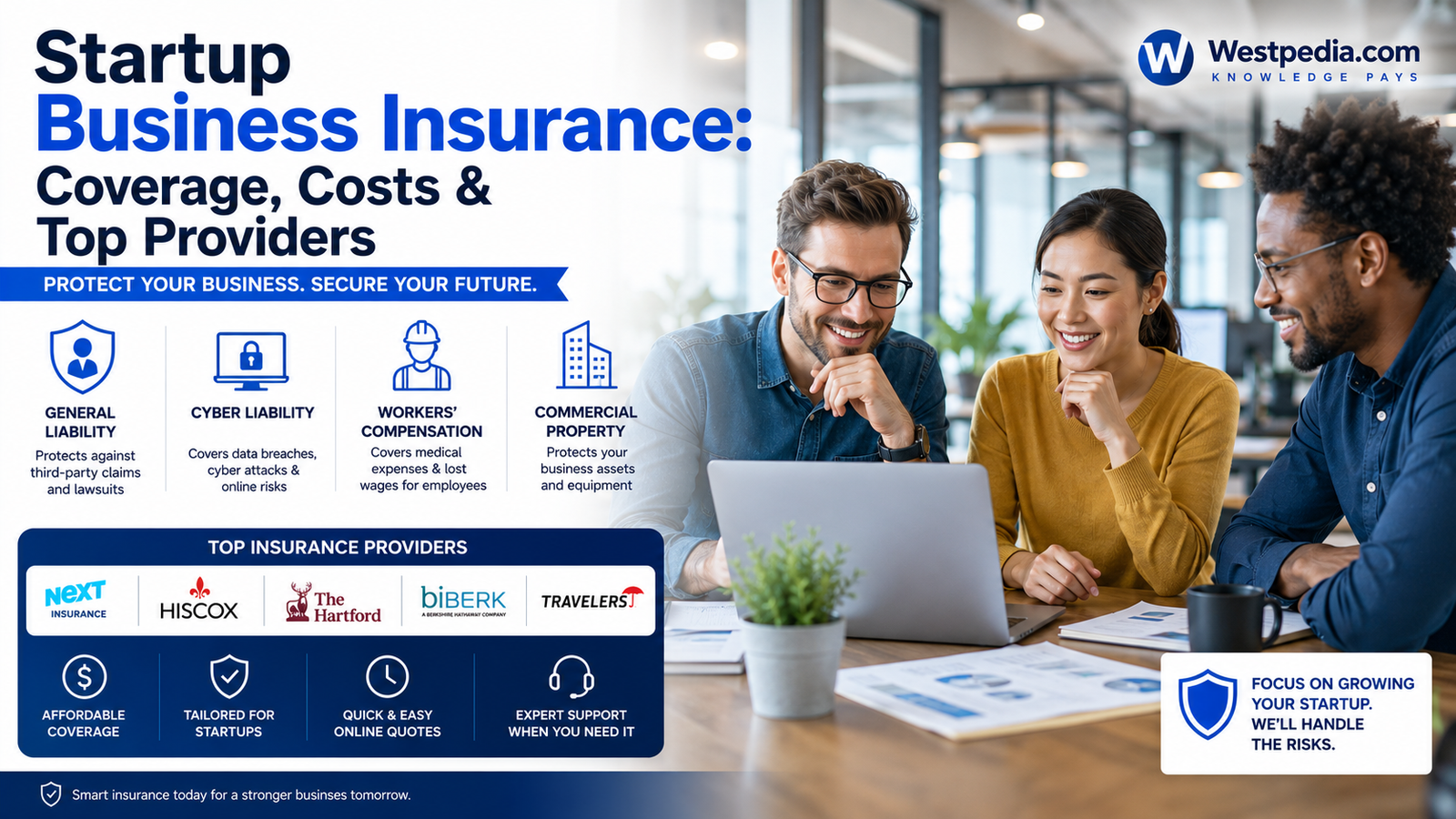
Why Startups Need Business Insurance
Even newly established companies face potential liabilities. A customer lawsuit, cyberattack, employee injury, or property loss could create expenses that many startups are not financially prepared to absorb.
Insurance may also be required by:
- Commercial lease agreements
- Investor requirements
- Client contracts
- Lenders and financing agreements
- State employment regulations
Common Risks Faced by Startups
- Third-party bodily injury claims
- Property damage claims
- Professional mistakes or negligence allegations
- Cybersecurity incidents
- Employee injuries
- Business interruption losses
- Employment-related lawsuits
- Product liability claims
Startup Business Insurance Coverage Comparison
| Coverage Type | What It Covers | Recommended For |
|---|---|---|
| General Liability Insurance | Third-party injury and property damage claims | Most startups |
| Professional Liability Insurance | Errors, omissions, and negligence claims | Service-based startups |
| Commercial Property Insurance | Office equipment and business property | Businesses with physical assets |
| Cyber Liability Insurance | Data breaches and cyberattacks | Technology and online businesses |
| Workers’ Compensation Insurance | Employee workplace injuries | Startups with employees |
| Business Interruption Insurance | Income loss following covered disruptions | Revenue-generating businesses |
Best Insurance Providers for Startups
| Provider | Best For | Coverage Strengths | Pricing Position | Potential Limitations |
|---|---|---|---|---|
| Hiscox | Small startups and freelancers | Flexible online coverage | Competitive | Coverage limits may be lower |
| The Hartford | Growing startups | Broad business owner’s policies | Competitive | Availability varies by state |
| Travelers | Expanding businesses | Wide commercial product portfolio | Mid-range | Complex risks may require agent support |
| Chubb | Venture-backed startups | Advanced risk solutions | Premium | Higher premiums for some startups |
| Progressive Commercial | Vehicle-dependent startups | Commercial auto expertise | Competitive | Limited specialization outside auto coverage |
How Much Does Startup Business Insurance Cost?
Insurance costs for startups vary depending on industry, operations, employee count, and selected coverage limits.
| Startup Type | Estimated Monthly Premium Range | Risk Level |
|---|---|---|
| Consulting Startup | $25–$100+ | Low |
| E-commerce Startup | $40–$200+ | Moderate |
| Retail Startup | $50–$300+ | Moderate |
| Technology Startup | $75–$500+ | Moderate to High |
| Construction Startup | $300–$2,500+ | High |
Factors That Affect Insurance Premiums
- Industry classification (NAICS)
- Annual revenue projections
- Business location
- Employee count
- Business operations
- Coverage limits selected
- Deductible amounts
- Claims history of owners
- Cybersecurity controls
- Safety programs
How Insurers Evaluate Startup Risks
Underwriters assess numerous factors when determining startup eligibility and pricing.
- Business model
- Founder experience
- Projected revenue
- Industry exposure
- Customer base
- Operational procedures
- Data handling practices
- Employee safety programs
Understanding the Claims Process
- Report the incident promptly.
- Document losses and damages.
- Provide photographs and supporting records.
- An insurance adjuster investigates the claim.
- The insurer determines coverage applicability.
- Covered claims proceed to settlement.
How Startups Can Reduce Insurance Costs
- Bundle coverages through a business owner’s policy.
- Implement cybersecurity safeguards.
- Establish workplace safety procedures.
- Choose appropriate deductibles.
- Review coverage annually.
- Train employees regularly.
- Compare quotes from multiple insurers.
Common Insurance Mistakes Startups Make
- Purchasing insufficient coverage.
- Ignoring cyber risks.
- Choosing policies solely based on price.
- Failing to update policies as the company grows.
- Overlooking professional liability exposures.
- Not reviewing policy exclusions.
Expert Considerations Before Buying Coverage
Startup founders should evaluate contractual obligations, investor expectations, operational risks, and future growth plans before selecting insurance.
Coverage should evolve alongside the business as revenues, staffing levels, and risk exposures change.
Frequently Asked Questions
1. Do startups need business insurance?
Most startups should consider insurance because even early-stage companies face liability and operational risks.
2. What insurance is most important for startups?
General liability insurance is often a foundational coverage, although needs vary by industry.
3. How much does startup business insurance cost?
Many startups pay between $25 and several hundred dollars monthly depending on risk factors.
4. Is workers’ compensation required for startups?
Requirements vary by state and generally depend on employee count.
5. Do technology startups need cyber insurance?
Technology companies frequently benefit from cyber coverage because they often handle sensitive digital information.
6. Can home-based startups purchase insurance?
Yes. Many insurers offer policies specifically designed for home-based businesses.
7. Does general liability cover professional mistakes?
No. Professional liability insurance generally covers errors and omissions claims.
8. When should startups buy insurance?
Coverage should ideally be secured before operations begin or contractual obligations arise.
9. Can startups bundle multiple coverages?
Yes. Business owner’s policies commonly combine several coverages into one package.
10. How often should startups review insurance?
Insurance should be reviewed annually and whenever significant business changes occur.