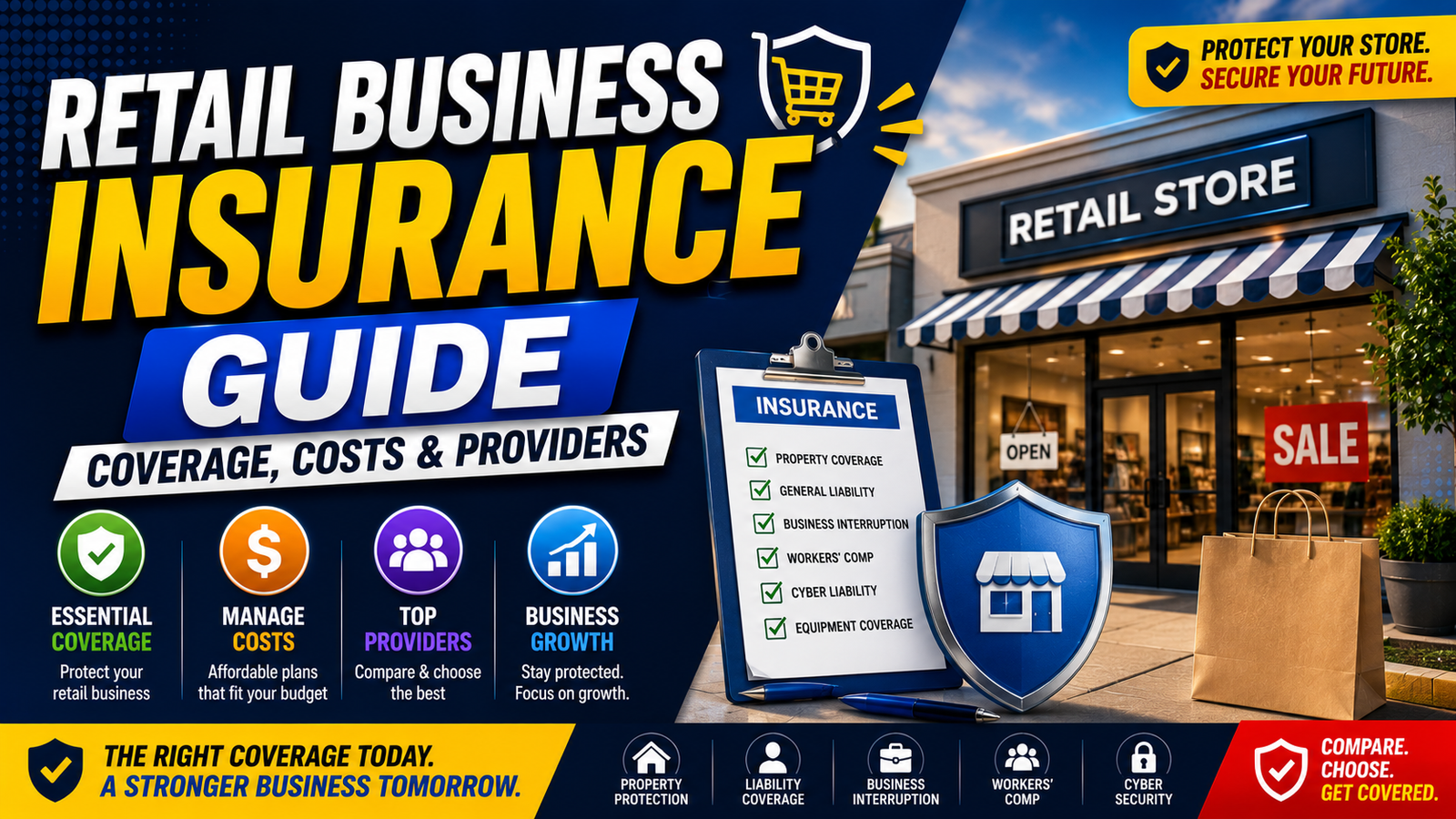
Retail businesses face unique risks that differ from many other industries. Every day, store owners welcome customers into their premises, manage inventory, process payments, supervise employees, and rely on technology to keep operations running smoothly. A customer slip-and-fall accident, inventory theft, cyberattack, fire, or workplace injury can quickly create unexpected expenses. Retail business insurance helps protect against these risks by providing financial protection when covered incidents occur.
Whether you operate a clothing boutique, grocery store, electronics retailer, furniture showroom, convenience store, or e-commerce business with a warehouse, understanding retail insurance coverage can help you make informed risk management decisions.
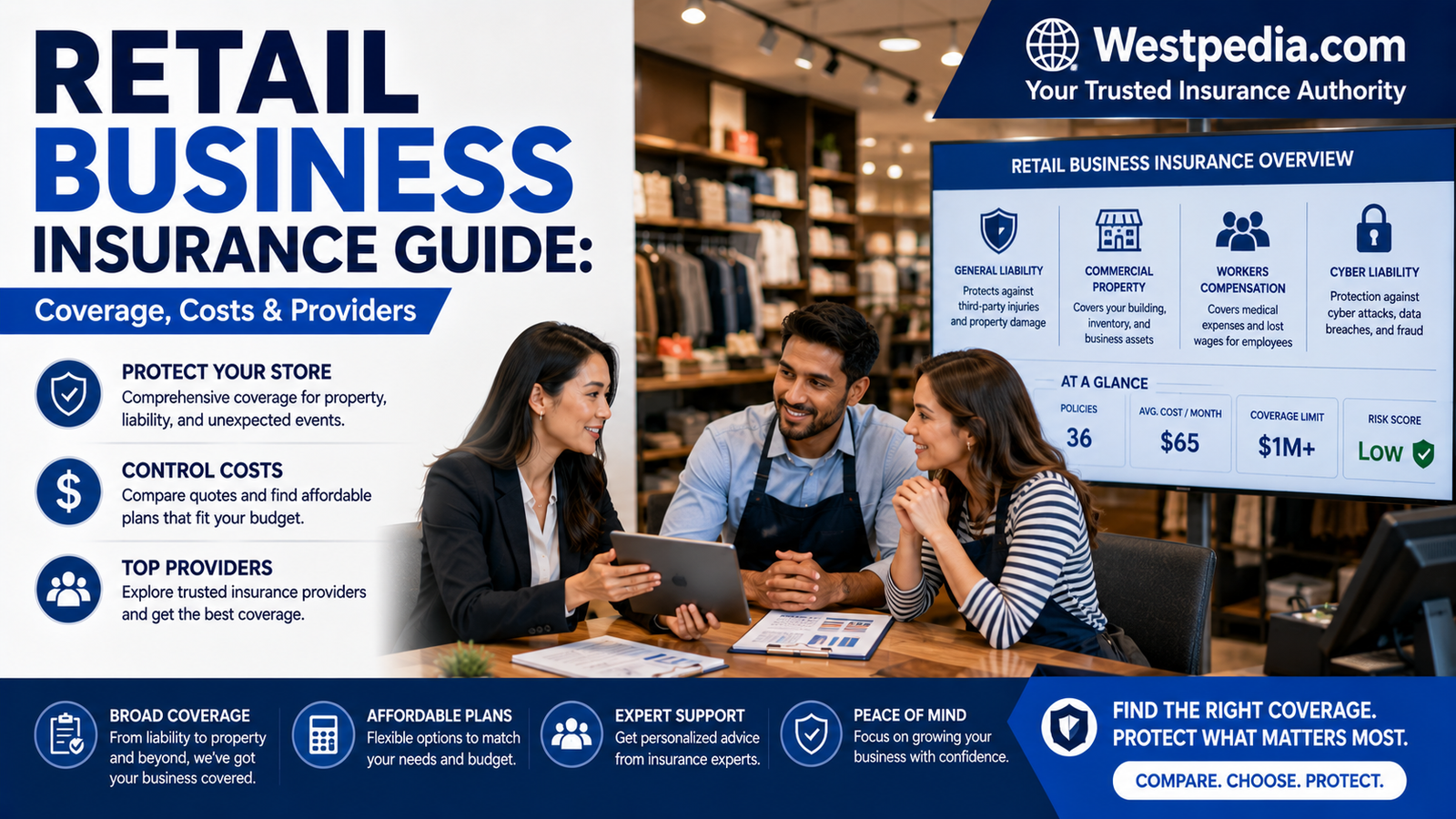
What Is Retail Business Insurance?
Retail business insurance refers to a group of commercial insurance policies designed to protect retail businesses from financial losses arising from liability claims, property damage, employee injuries, cyber incidents, inventory losses, and business interruptions.
Rather than relying on a single policy, most retailers combine several insurance coverages to address different exposures associated with customer-facing operations.
Why Retail Businesses Need Insurance
Retailers interact directly with customers and manage valuable inventory, making them vulnerable to a wide range of claims and losses.
Retail business insurance helps:
- Protect inventory and physical assets
- Reduce financial exposure from lawsuits
- Address workplace injury claims
- Support business continuity after covered losses
- Meet lease and contractual requirements
- Protect customer payment and personal data
Who Needs Retail Business Insurance?
Most retail operations benefit from insurance protection regardless of size.
- Clothing stores
- Convenience stores
- Grocery stores
- Electronics retailers
- Furniture stores
- Specialty retail shops
- Online retailers with inventory
- Franchise retail locations
- Multi-location retail businesses
- Pop-up retail operators
Common Retail Risk Scenarios
Customer Slip-and-Fall Accident
A customer slips on a recently cleaned floor and suffers injuries that result in a liability claim.
Inventory Loss
A fire damages inventory, shelving, equipment, and store fixtures.
Theft and Vandalism
Criminal activity results in stolen merchandise and property damage.
Cyberattack
Hackers compromise payment systems and access customer information.
Employee Injury
A worker suffers an injury while unloading inventory or stocking shelves.
Retail insurance policies are designed to help address these exposures.
Essential Retail Business Insurance Coverages
General Liability Insurance
General liability insurance is one of the most important coverages for retailers because customers regularly visit retail locations.
Coverage may help with:
- Customer injuries
- Third-party property damage
- Legal defense costs
- Certain settlements and judgments
Commercial Property Insurance
Property insurance protects physical business assets from covered losses.
Covered property may include:
- Buildings
- Inventory
- Display fixtures
- Furniture
- Computers
- Point-of-sale systems
- Equipment
Business Interruption Insurance
If a covered event forces a retail store to close temporarily, business interruption insurance may help replace lost income and cover certain ongoing expenses.
Workers Compensation Insurance
Workers compensation coverage helps provide benefits for employees who experience work-related injuries or illnesses.
Benefits may include:
- Medical treatment
- Lost wage replacement
- Rehabilitation expenses
- Disability benefits
Cyber Liability Insurance
Retailers increasingly rely on digital payment systems and customer data.
Cyber liability insurance may help address:
- Data breaches
- Payment card incidents
- Cyber extortion events
- Notification expenses
- Forensic investigations
- Business interruption losses
Professional Liability Insurance (E&O)
While not required for every retailer, professional liability coverage may benefit businesses that provide consulting, installation, customization, or advisory services.
Retail Business Insurance Coverage Comparison Table
| Coverage Type | Primary Protection | Retail Risk Addressed | Typical Importance |
|---|---|---|---|
| General Liability | Third-party claims | Customer injuries | High |
| Commercial Property | Physical assets | Inventory and store damage | High |
| Business Interruption | Income replacement | Temporary store closure | High |
| Workers Compensation | Employee injuries | Workplace accidents | Required in many situations |
| Cyber Liability | Cyber incidents | Payment data breaches | Growing importance |
| Professional Liability | Professional services | Advice-related claims | Industry specific |
How Insurers Evaluate Retail Businesses
Insurance companies assess multiple underwriting factors before determining eligibility and premiums.
Business Operations
Insurers evaluate store activities, customer traffic, inventory handling, and operational complexity.
Revenue Size
Higher revenue often indicates increased customer interactions and greater exposure.
Employee Count
Larger workforces generally increase workers compensation exposure.
NAICS Classification
Retail classifications help insurers compare businesses with similar risk profiles.
Claims History
Previous losses may affect future underwriting decisions and pricing.
Safety Procedures
Documented safety programs and loss prevention measures can influence risk assessments.
How Much Does Retail Business Insurance Cost?
Insurance costs vary based on store size, inventory value, location, claims history, and selected coverage limits.
| Retail Risk Level | Example Business Type | Estimated Annual Premium Range |
|---|---|---|
| Low Risk | Small boutique, gift shop | $500–$2,500+ |
| Moderate Risk | Clothing store, specialty retailer | $2,500–$8,000+ |
| Higher Risk | Large inventory retailers, multi-location stores | $8,000–$50,000+ or more |
Actual premiums depend on underwriting review and individual business characteristics.
Key Factors Affecting Retail Insurance Premiums
- Store size
- Annual revenue
- Inventory value
- Location and crime rates
- Employee count
- Claims history
- Coverage limits
- Deductible levels
- Cybersecurity practices
- Security systems and surveillance
Retail Insurance Provider Comparison
| Provider | Best For | Coverage Strengths | Potential Limitations | Pricing Position |
|---|---|---|---|---|
| The Hartford | Small and medium retail businesses | Broad commercial coverage options | Industry appetite varies | Mid-range |
| Progressive Commercial | Retailers with delivery vehicles | Commercial auto expertise | Coverage focus depends on operations | Competitive |
| Hiscox | Small retailers and online businesses | Flexible small business offerings | Less focused on complex enterprises | Competitive to mid-range |
| Chubb | Higher-value retail operations | Customizable coverage structures | May cost more than standard markets | Premium |
| Travelers | Diverse retail sectors | Comprehensive commercial portfolio | Coverage availability varies | Mid-range to premium |
How the Claims Process Works
1. Incident Reporting
Report the incident to the insurer as soon as possible after discovery.
2. Documentation Collection
Gather photographs, receipts, inventory records, surveillance footage, invoices, and witness statements.
3. Adjuster Investigation
An adjuster reviews damages, facts, and policy provisions.
4. Settlement Review
The insurer evaluates coverage applicability, exclusions, and financial impact.
5. Payment Timeline
Resolution timing varies based on claim complexity and supporting documentation.
State Regulations and Compliance Considerations
State regulations can influence workers compensation requirements, liability obligations, and insurance purchasing decisions.
Retailers may also face insurance requirements through:
- Commercial leases
- Franchise agreements
- Vendor contracts
- Government permits
- Licensing requirements
Risk Management Strategies for Retailers
- Maintain clean and safe premises
- Install security cameras
- Implement inventory controls
- Train employees regularly
- Document safety procedures
- Perform routine maintenance
- Review insurance annually
- Use secure payment processing systems
Cyber Risk Reduction for Retail Businesses
- Use encrypted payment systems
- Enable multi-factor authentication
- Perform regular software updates
- Train employees on phishing threats
- Conduct cybersecurity audits
- Maintain secure customer data practices
Common Retail Insurance Mistakes
- Underinsuring inventory
- Choosing coverage solely based on price
- Ignoring cyber liability exposures
- Failing to update coverage after growth
- Overlooking business interruption risks
- Not reviewing policy exclusions
- Providing inaccurate underwriting information
Expert Considerations Before Requesting Quotes
Before requesting retail insurance quotes, gather information regarding annual revenue, inventory values, payroll, employee count, locations, and previous claims.
Comparing multiple insurers, reviewing exclusions, evaluating coverage limits, and understanding deductibles can help retailers make informed insurance decisions.
Frequently Asked Questions
1. What is retail business insurance?
It is a collection of policies designed to protect retail businesses from financial losses caused by covered risks.
2. Is retail business insurance required?
Certain coverages may be legally required depending on location and business operations.
3. How much does retail insurance cost?
Costs vary based on inventory value, location, revenue, workforce size, and coverage selections.
4. Does retail insurance cover theft?
Property coverage may help address certain theft-related losses depending on policy terms.
5. What does general liability insurance cover?
It helps protect against third-party injury and property damage claims.
6. Is cyber insurance important for retailers?
Many retailers process customer payment information, making cyber coverage increasingly relevant.
7. What affects premiums the most?
Revenue, inventory values, location, claims history, employee count, and coverage limits are major factors.
8. What is business interruption insurance?
It helps replace lost income when operations are interrupted by a covered event.
9. Are all customer injury claims covered?
Coverage depends on policy language, exclusions, and claim circumstances.
10. What is a deductible?
A deductible is the amount paid by the business before covered insurance benefits apply.
11. Can online retailers buy business insurance?
Yes. Many insurers offer coverage options tailored to e-commerce businesses.
12. How long does a claim take?
Claim timelines vary depending on complexity and available documentation.
13. Should retailers compare multiple quotes?
Comparing quotes helps identify differences in coverage, exclusions, pricing, and carrier strengths.
14. What documents are needed for a quote?
Revenue records, payroll information, inventory values, and business details are commonly requested.
15. Can retail insurance help satisfy lease requirements?
Many landlords require specific insurance coverages as part of lease agreements.
Related Topics
- Small Business Insurance
- Commercial Property Insurance
- General Liability Insurance
- Workers Compensation Insurance
- Cyber Liability Insurance