Business insurance helps protect companies from financial losses resulting from lawsuits, accidents, property damage, employee injuries, cyberattacks, and operational interruptions. Whether you operate a small startup, a professional services firm, a retail store, or a manufacturing company, having appropriate insurance coverage can be a critical part of your risk management strategy.
Modern businesses face a wide range of risks. A customer injury claim, data breach, equipment loss, professional mistake, or workplace accident can create substantial financial obligations. Business insurance is designed to transfer a portion of that risk to an insurer in exchange for a premium.
What Is Business Insurance?
Business insurance is an umbrella term that describes multiple insurance policies designed to protect organizations against financial losses. Depending on the nature of the business, coverage may include liability protection, property protection, employee-related coverage, cyber protection, and income replacement after covered disruptions.
The specific policies required vary based on industry, revenue, employee count, contractual obligations, and regulatory requirements.
Why Business Insurance Matters
Many business owners underestimate the financial impact of unexpected incidents. Even a single claim can create significant legal fees, settlement costs, repair expenses, or lost income.
Business insurance helps:
- Protect company assets
- Reduce financial exposure from lawsuits
- Support business continuity after covered losses
- Meet contractual obligations
- Comply with insurance requirements in certain jurisdictions
- Build credibility with customers and vendors
Who Needs Business Insurance?
Virtually every business faces risk exposure. Common organizations that purchase business insurance include:
- Small businesses
- Retail stores
- Construction contractors
- Professional consultants
- Technology companies
- Healthcare practices
- Manufacturing businesses
- E-commerce companies
- Restaurants and hospitality businesses
- Real estate firms
Real-World Risk Scenarios
Scenario 1: A customer slips and falls inside a retail store, resulting in medical expenses and a lawsuit.
Scenario 2: A consultant provides advice that allegedly causes financial loss to a client.
Scenario 3: A ransomware attack disrupts operations and exposes customer data.
Scenario 4: A fire damages business property and temporarily shuts down operations.
Scenario 5: An employee suffers an injury while performing job duties.
Each of these situations may trigger different insurance coverages.
Business Insurance Coverage Types
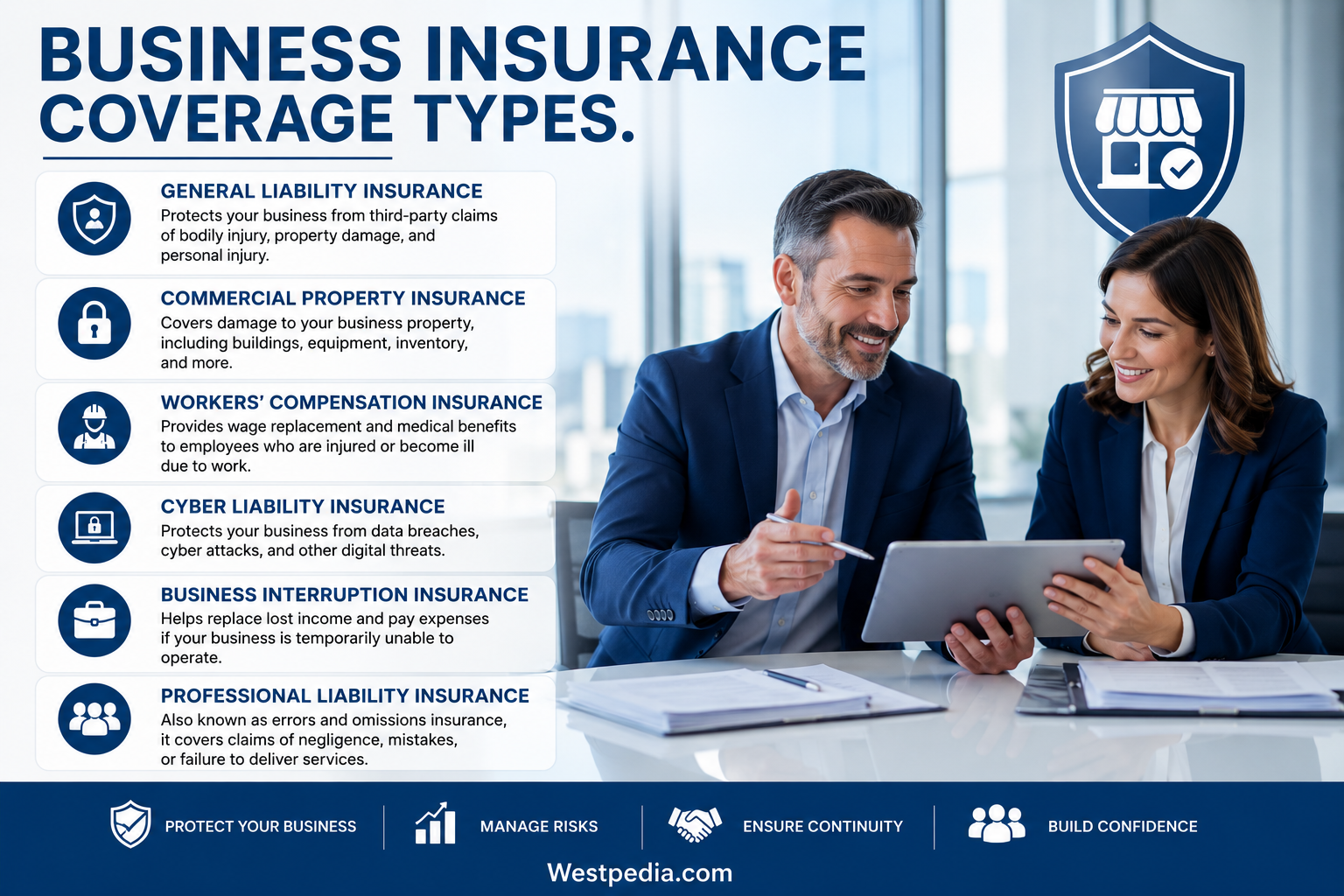
General Liability Insurance
General liability insurance helps protect businesses against third-party bodily injury, property damage, and advertising injury claims.
Commonly covers:
- Customer injuries
- Property damage to others
- Legal defense costs
- Certain settlement expenses
Professional Liability Insurance (Errors & Omissions)
Professional liability insurance protects businesses that provide advice or services. Coverage may apply when clients allege negligence, mistakes, or failure to perform professional duties.
Common users include:
- Consultants
- Accountants
- Architects
- IT professionals
- Marketing agencies
Commercial Property Insurance
Commercial property insurance helps protect physical assets such as:
- Buildings
- Furniture
- Equipment
- Inventory
- Computers
Workers Compensation Insurance
Workers compensation insurance provides benefits for employees who experience work-related injuries or illnesses.
Coverage may include:
- Medical expenses
- Lost wages
- Rehabilitation costs
- Disability benefits
Requirements vary by jurisdiction and employee count.
Cyber Liability Insurance
Cyber insurance helps businesses respond to data breaches, ransomware attacks, and cybersecurity incidents.
Coverage may include:
- Data breach response
- Legal expenses
- Notification costs
- Forensic investigations
- Business interruption losses
Business Interruption Insurance
Business interruption coverage helps replace lost income when operations are suspended due to a covered event.
This coverage can help businesses manage ongoing expenses while recovering from significant disruptions.
Coverage Comparison Table
| Coverage Type | Primary Protection | Who Typically Needs It | Key Risk Addressed |
|---|---|---|---|
| General Liability | Third-party claims | Most businesses | Customer injury lawsuits |
| Professional Liability | Professional errors | Service providers | Negligence allegations |
| Commercial Property | Physical assets | Property owners and tenants | Fire, theft, damage |
| Workers Compensation | Employee injuries | Employers | Workplace accidents |
| Cyber Liability | Cyber incidents | Data-driven businesses | Data breaches |
| Business Interruption | Lost income | Most operating businesses | Operational shutdowns |
How Insurance Companies Evaluate Risk
Insurance underwriters assess several factors before determining eligibility, pricing, and coverage terms.
Business Operations
The nature of daily operations influences risk exposure. Businesses with physical hazards typically face higher premiums than office-based firms.
Revenue Size
Higher revenue often increases exposure because more transactions create additional opportunities for claims.
Employee Count
More employees generally increase workers compensation and liability exposures.
Industry Classification
Insurers frequently use NAICS classifications to evaluate risk categories and compare businesses with similar operations.
Claims History
Past claims can significantly influence underwriting decisions and future premiums.
Safety and Compliance Programs
Businesses with documented safety procedures and compliance programs may present lower underwriting risk.
How Much Does Business Insurance Cost?
Business insurance costs vary considerably depending on operations, industry, location, and coverage requirements.
| Risk Profile | Typical Business Type | Estimated Annual Premium Range |
|---|---|---|
| Low Risk | Consulting, marketing, office services | $500–$2,000+ |
| Moderate Risk | Retail, light contracting, professional firms | $2,000–$8,000+ |
| High Risk | Construction, manufacturing, specialized trades | $8,000–$50,000+ or more |
Actual premiums depend on individual underwriting outcomes and coverage selections.
Factors That Affect Business Insurance Premiums
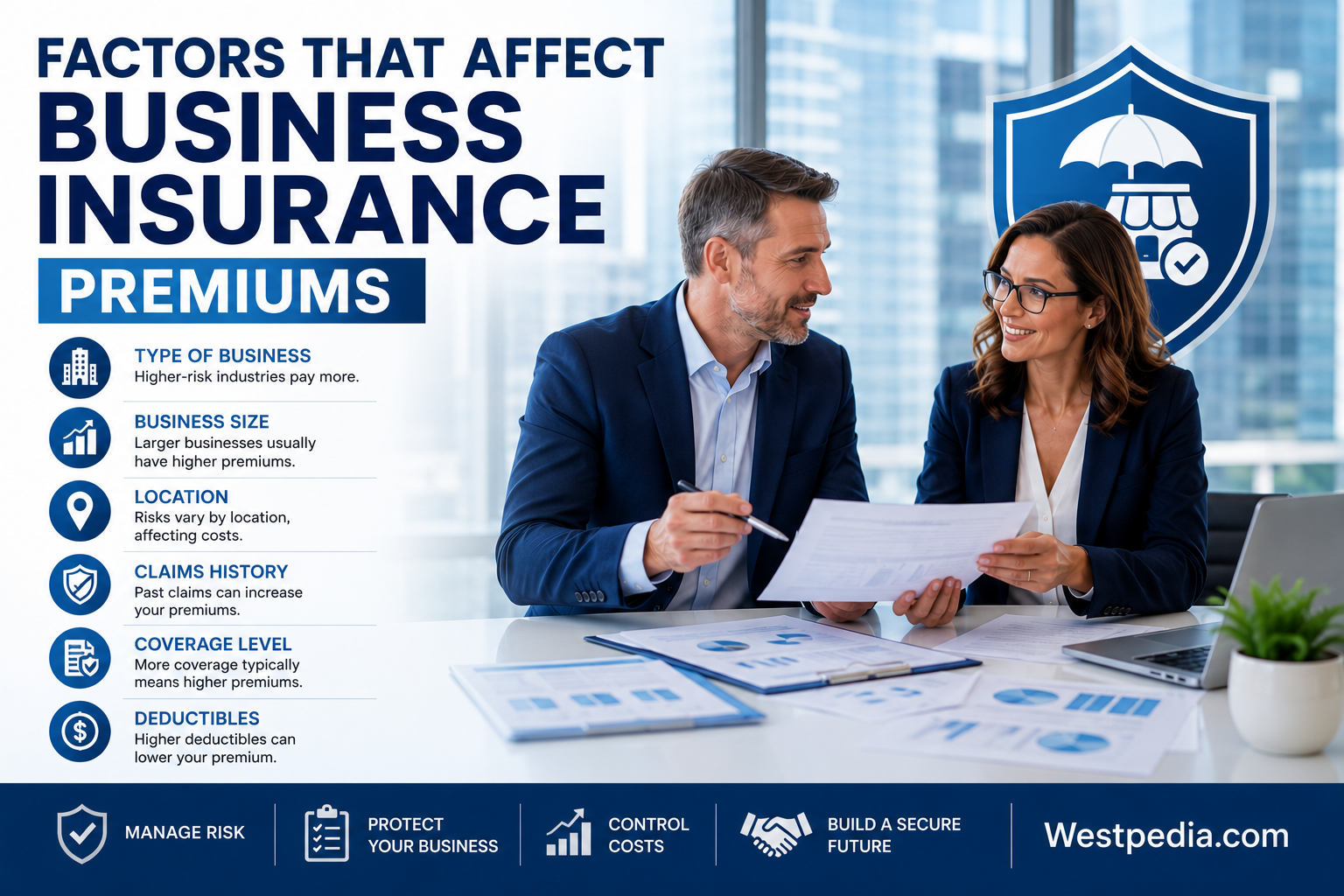
- Industry risk level
- Business size
- Annual revenue
- Payroll amounts
- Location and jurisdiction
- Claims history
- Coverage limits selected
- Deductible amounts
- Property values
- Cybersecurity controls
Comparing Major Business Insurance Providers
Different carriers serve different business profiles. Comparing coverage, underwriting appetite, and service capabilities is often more important than comparing price alone.
| Provider | Best For | Coverage Strengths | Potential Limitations | Pricing Position |
|---|---|---|---|---|
| The Hartford | Small and mid-sized businesses | Broad commercial offerings | May not fit every high-risk industry | Mid-range |
| Progressive Commercial | Commercial vehicle users | Commercial auto expertise | Coverage focus varies by market | Competitive |
| Hiscox | Professional services and micro-businesses | Professional liability options | Less focused on large enterprises | Competitive to mid-range |
| Chubb | Complex and higher-value risks | Broad customization | Premiums may be higher | Premium positioning |
| Travelers | Wide industry range | Strong commercial portfolio | Coverage availability varies | Mid-range to premium |
How the Claims Process Works
Understanding the claims process can help businesses respond more effectively after an incident.
1. Incident Reporting
Notify the insurer promptly after discovering a covered event.
2. Documentation Collection
Gather photos, reports, invoices, witness statements, contracts, and other relevant records.
3. Adjuster Review
An insurance adjuster investigates the circumstances and evaluates coverage applicability.
4. Claim Evaluation and Settlement
The insurer reviews damages, policy terms, exclusions, and supporting evidence.
5. Payment Timeline
Settlement timelines vary depending on claim complexity, documentation quality, and regulatory requirements.
State and Regulatory Considerations
Business insurance regulations differ by jurisdiction. Certain coverages, such as workers compensation, may be mandatory depending on local laws.
Coverage requirements can also arise through:
- Professional licensing boards
- Client contracts
- Vendor agreements
- Commercial lease requirements
- Government project bidding requirements
Business owners should review applicable regulations in their operating locations before purchasing coverage.
How to Reduce Business Insurance Costs
Lower premiums should not come at the expense of adequate protection. Instead, businesses can focus on risk reduction strategies.
- Implement documented safety programs
- Train employees regularly
- Maintain accurate records
- Improve cybersecurity controls
- Review coverage annually
- Bundle compatible policies where available
- Increase deductibles only when financially appropriate
- Address recurring claim causes
Cyber and Liability Risk Reduction Strategies
- Enable multi-factor authentication
- Conduct regular software updates
- Use employee cybersecurity training
- Maintain written operational procedures
- Document client communications
- Use contracts reviewed by qualified legal professionals
- Perform periodic compliance reviews
Common Business Insurance Mistakes
- Buying coverage based solely on price
- Underestimating liability exposures
- Failing to review exclusions
- Ignoring cyber risks
- Not updating policies after business growth
- Insufficient business interruption protection
- Failing to disclose material underwriting information
Expert Considerations Before Requesting Quotes
Before obtaining business insurance quotes, gather accurate information regarding revenue, payroll, operations, property values, employee count, and prior claims. Accurate information helps insurers evaluate risk appropriately and can improve quote accuracy.
Comparing multiple providers, reviewing policy exclusions, and understanding coverage limits are important steps before making a purchase decision.
Frequently Asked Questions
1. What does business insurance cover?
Coverage depends on the policy but may include liability claims, property damage, employee injuries, cyber incidents, and business interruption losses.
2. Is business insurance legally required?
Some coverages may be legally required depending on jurisdiction and business operations, particularly workers compensation insurance.
3. How much business insurance do I need?
The appropriate amount depends on assets, liabilities, contracts, industry risks, and operational exposure.
4. What is general liability insurance?
General liability insurance protects against many third-party injury and property damage claims.
5. What is professional liability insurance?
It protects businesses against claims alleging professional mistakes, negligence, or inadequate services.
6. Does business insurance cover cyberattacks?
Cyber incidents are typically addressed through cyber liability insurance rather than standard liability policies.
7. What affects insurance premiums the most?
Industry risk, revenue, payroll, location, claims history, and coverage limits are major pricing factors.
8. Can startups get business insurance?
Yes. Many insurers offer coverage designed specifically for startups and small businesses.
9. What is a deductible?
A deductible is the amount the insured typically pays before covered insurance benefits apply.
10. How long do claims take to settle?
Timelines vary widely depending on claim complexity and documentation.
11. Can a business have multiple insurance policies?
Yes. Many businesses combine several policies to address different exposures.
12. What is business interruption insurance?
It helps replace lost income when operations are interrupted by a covered event.
13. Are all lawsuits covered by business insurance?
No. Coverage depends on policy language, exclusions, and claim circumstances.
14. Why do insurers review claim history?
Past claims help insurers evaluate future risk and pricing.
15. Should I compare multiple quotes?
Comparing multiple quotes and policy terms can help identify coverage differences and potential value.
Related Topics
- General Liability Insurance
- Professional Liability Insurance
- Workers Compensation Insurance
- Cyber Liability Insurance
- Commercial Insurance
- Best Business Loans