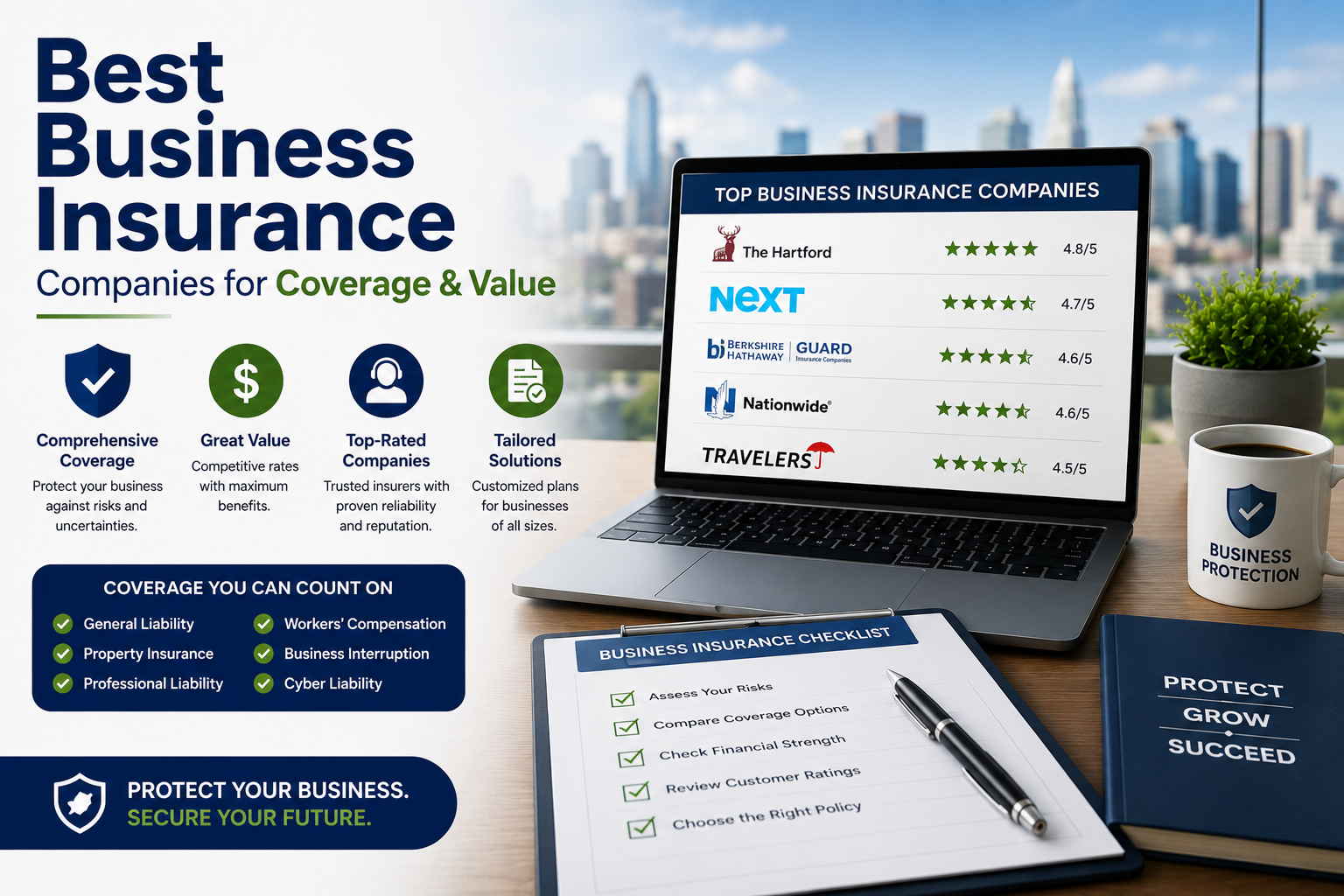
The best business insurance companies offer a combination of strong financial stability, broad coverage options, competitive pricing, and industry-specific policies. Top insurers typically provide general liability, property, workers’ compensation, and cyber coverage while supporting businesses through efficient claims handling and risk management services. Comparing multiple providers helps businesses select coverage that aligns with their industry, budget, and risk profile.
Best Business Insurance Companies: Compare Coverage, Costs & Providers
Choosing the right business insurance provider is an important decision for any company. The ideal insurer should offer reliable financial protection, responsive claims support, flexible policy options, and industry-specific expertise.
Because business risks vary significantly by industry, no single insurance company is universally best for every organization. Instead, businesses should compare providers based on coverage needs, company size, operational risks, and budget.
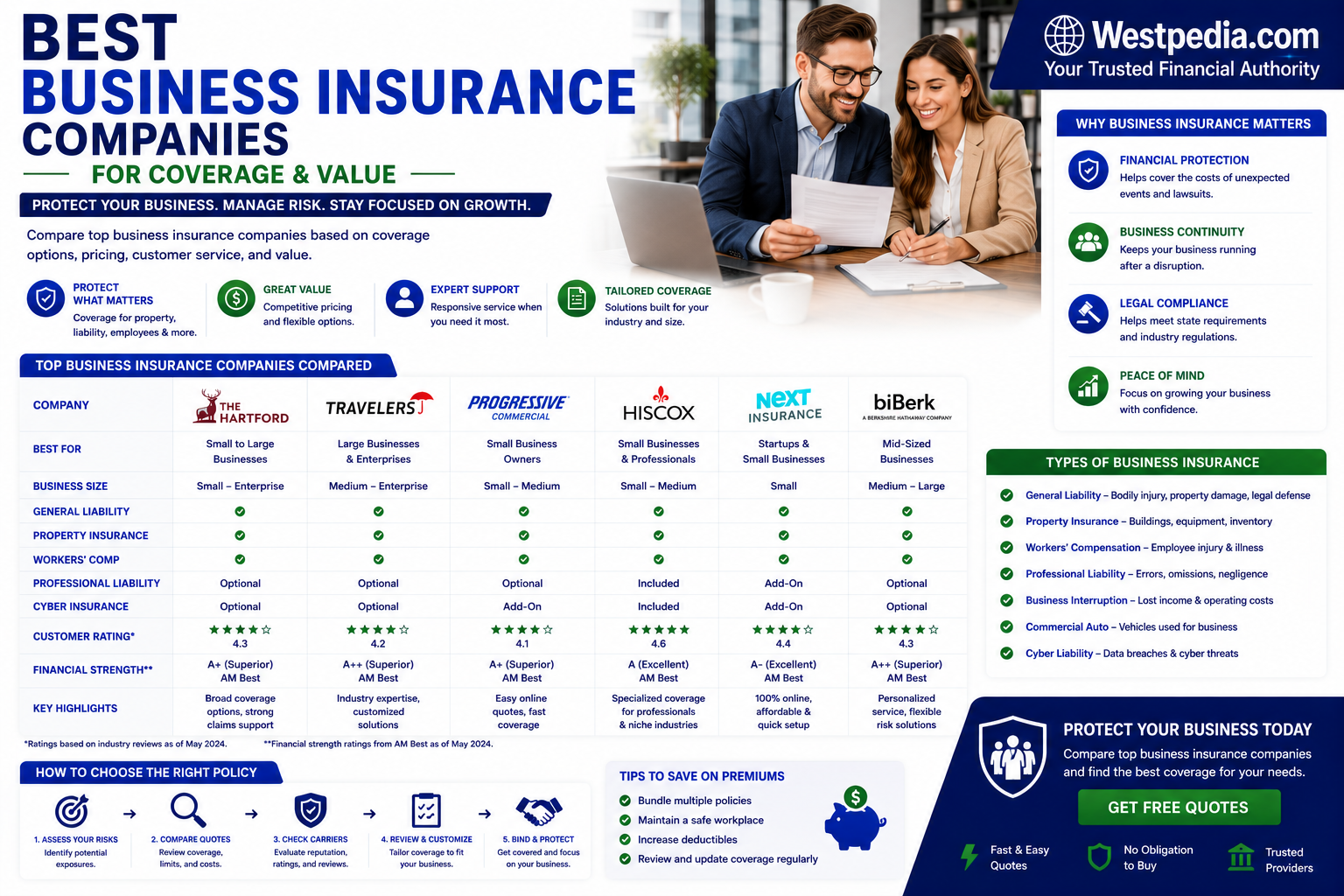
How We Evaluated Business Insurance Providers
The providers in this guide were evaluated based on several key factors:
- Financial strength ratings
- Coverage breadth
- Industry specialization
- Claims reputation
- Pricing competitiveness
- Digital tools and policy management
- Risk management resources
- Customer service accessibility
Top Business Insurance Companies Compared
| Provider | Best For | Coverage Strengths | Pricing Position | Potential Limitations |
|---|---|---|---|---|
| The Hartford | Small businesses | Broad commercial package policies | Competitive | Availability varies by state |
| Hiscox | Professional services | Professional liability expertise | Competitive | Limited appetite for some high-risk industries |
| Travelers | Mid-size businesses | Extensive commercial offerings | Mid-range | Online purchasing options vary |
| Chubb | Large and complex risks | Customized coverage solutions | Premium | Higher pricing for some businesses |
| Progressive Commercial | Commercial auto coverage | Fleet and vehicle expertise | Competitive | Non-auto offerings may vary |
Coverage Options Most Businesses Should Consider
| Coverage Type | What It Covers | Who Needs It |
|---|---|---|
| General Liability Insurance | Third-party bodily injury and property damage claims | Most businesses |
| Commercial Property Insurance | Buildings, equipment, and inventory | Businesses with physical assets |
| Professional Liability Insurance | Professional errors and negligence claims | Consultants and service providers |
| Workers’ Compensation | Employee work-related injuries | Employers with staff |
| Cyber Liability Insurance | Data breaches and cyber incidents | Businesses handling digital information |
| Business Interruption Insurance | Lost income following covered disruptions | Businesses dependent on ongoing operations |
The Hartford
The Hartford is frequently selected by small and midsize businesses because of its broad policy offerings and strong business owner’s policy (BOP) solutions.
Strengths
- Extensive small business expertise
- Flexible package policies
- Strong risk management resources
- Broad industry appetite
Potential Limitations
- Premiums may vary by industry and location.
Hiscox
Hiscox specializes in professional liability and small business insurance products, particularly for consultants, freelancers, and professional firms.
Strengths
- Strong professional liability products
- Flexible coverage for home-based businesses
- Streamlined online quoting
Potential Limitations
- Limited availability for some higher-risk industries.
Travelers
Travelers offers one of the broadest commercial insurance portfolios available and serves organizations ranging from startups to large corporations.
Strengths
- Wide selection of policy options
- Strong commercial underwriting capabilities
- National presence
Potential Limitations
- Policy complexity may require agent assistance.
Chubb
Chubb is known for serving larger businesses and organizations with specialized or complex risk exposures.
Strengths
- Customized risk solutions
- Global capabilities
- Strong financial ratings
Potential Limitations
- Premium pricing may exceed some small business budgets.
Progressive Commercial
Progressive Commercial is particularly well known for commercial auto insurance and transportation-related risks.
Strengths
- Commercial vehicle expertise
- Fleet coverage solutions
- Competitive commercial auto pricing
Potential Limitations
- Coverage breadth outside auto insurance may vary.
How Much Does Business Insurance Cost?
Commercial insurance costs vary significantly depending on industry and risk exposure.
| Business Type | Estimated Monthly Premium Range | Risk Level |
|---|---|---|
| Consultant or Freelancer | $25–$100+ | Low |
| Retail Store | $50–$250+ | Moderate |
| Restaurant | $150–$600+ | High |
| Construction Company | $300–$2,000+ | Very High |
Factors Insurers Use to Determine Premiums
- Industry classification (NAICS)
- Annual revenue
- Payroll size
- Number of employees
- Claims history
- Location and state regulations
- Coverage limits selected
- Deductible amount
- Business operations
- Safety practices
How the Claims Process Works
- Report the incident immediately.
- Document losses and damages.
- Submit supporting evidence.
- An adjuster reviews the claim.
- The insurer determines coverage applicability.
- Settlement is issued for covered losses.
How to Lower Commercial Insurance Costs
- Implement workplace safety programs.
- Bundle policies through a business owner’s policy.
- Increase deductibles when appropriate.
- Train employees regularly.
- Improve cybersecurity controls.
- Review coverage annually.
- Compare quotes from multiple insurers.
Common Mistakes Businesses Make
- Choosing coverage based solely on price.
- Underinsuring business property.
- Ignoring cyber risks.
- Failing to review policies annually.
- Overlooking professional liability exposures.
- Not understanding policy exclusions.
Expert Considerations Before Buying
Before purchasing coverage, business owners should identify operational risks, evaluate legal requirements, estimate replacement costs, and compare multiple providers. Coverage should align with the organization’s size, industry, and long-term growth plans.
Frequently Asked Questions
1. Which company offers the best business insurance?
The best provider depends on business size, industry, risk profile, and coverage needs.
2. How much does business insurance cost?
Premiums may range from approximately $25 to several thousand dollars monthly depending on risk factors.
3. Is business insurance legally required?
Some coverages, such as workers’ compensation, may be required by state law.
4. What does a business owner’s policy include?
A BOP generally combines general liability, commercial property, and business interruption coverage.
5. Can startups buy business insurance?
Yes. Many insurers offer policies designed specifically for startups and small businesses.
6. How often should coverage be reviewed?
Businesses should review coverage annually or whenever operations change significantly.
7. What industries need cyber insurance?
Any organization handling customer, employee, or payment information should evaluate cyber coverage.
8. What affects premium costs most?
Industry risk, payroll, revenue, claims history, and coverage limits are major factors.
9. How can businesses compare insurers?
Review coverage options, exclusions, financial strength, claims service, and pricing.
10. Should businesses obtain multiple quotes?
Comparing multiple quotes can help businesses understand pricing and coverage differences.
Related Topics
- Small Business Insurance
- Commercial Insurance
- General Liability Insurance
- Professional Liability Insurance
- Workers’ Compensation Insurance