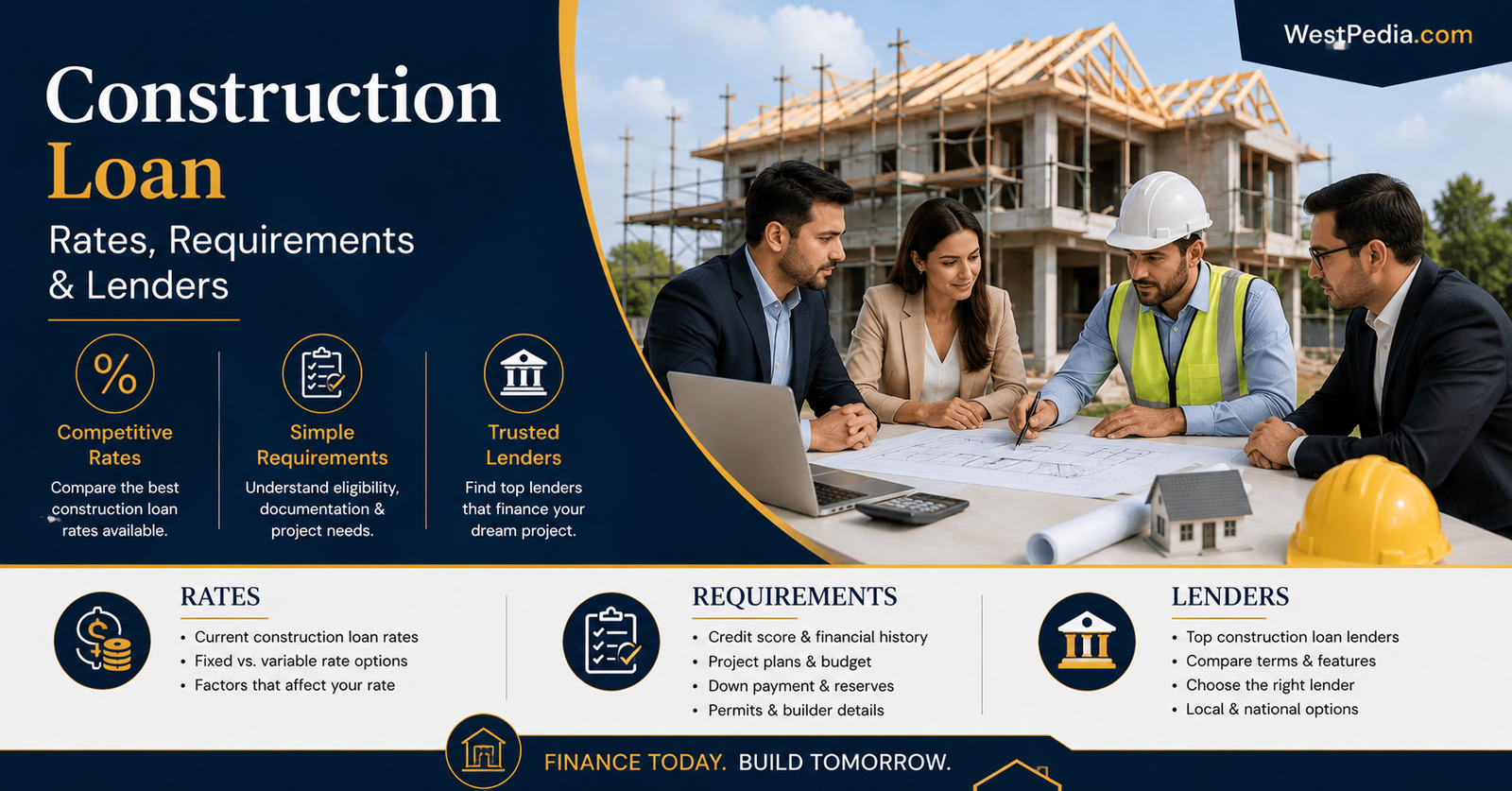
Construction Loans in 2026: Financing Your New Home Build. Building a new home requires significant upfront capital. A construction loan provides the necessary funding by disbursing money in stages as the project advances.
What Is a Construction Loan?
Construction loans are short-term loans (typically 6-18 months) designed to cover the costs of building a home, including land acquisition, materials, labor, and permits. Funds are released via “draws” after inspections verify progress. Many are construction-to-permanent loans that convert into a traditional mortgage once building is complete.
Who Should Consider a Construction Loan?
Ideal for homeowners wanting a custom home, those buying land to build on, or developers. Typical borrowers have strong credit, stable income, and a detailed project plan with a licensed builder.
Types of Construction Loans
| Loan Type | Best For | Key Features |
|---|---|---|
| Construction-to-Permanent (One-Time Close) | Owner-builders | Single closing, converts to mortgage |
| Construction-Only | Spec builders | Short-term, separate permanent financing needed |
| Renovation Loans (e.g., FHA 203(k)) | Fixer-uppers | Lower down payment options |
Current Rates, Costs & Terms
In 2026, construction loan rates generally range from 6.5% to 9.5% or higher, often 1-2% above conventional mortgage rates due to added risk.
Typical Terms:
- Loan amounts: Vary widely based on project cost
- Terms: 12-18 months construction phase
- Down payment: 20-25% of total project cost
- Interest: Often interest-only during construction on drawn amounts
| Factor | Impact on Cost |
|---|---|
| Credit Score | Higher scores (740+) unlock best rates |
| Down Payment | Larger reduces LTV and rates |
| DTI Ratio | Typically under 43-45% |
| Project Details | Detailed plans and experienced builder lower risk |
Lender Comparison
| Lender | Best For | Strengths | Limitations |
|---|---|---|---|
| Chase | Established customers | Wide network, competitive options | Strict documentation |
| Wells Fargo | New construction buyers | Specialized financing programs | May require higher credit |
| Bank of America | Relationship banking | Integrated services, jumbo options | Variable availability |
| U.S. Bank | Regional projects | Strong local expertise | Geographic focus |
Other options like credit unions or specialized lenders may offer more flexibility for unique projects. Always compare personalized terms.
Underwriting Factors
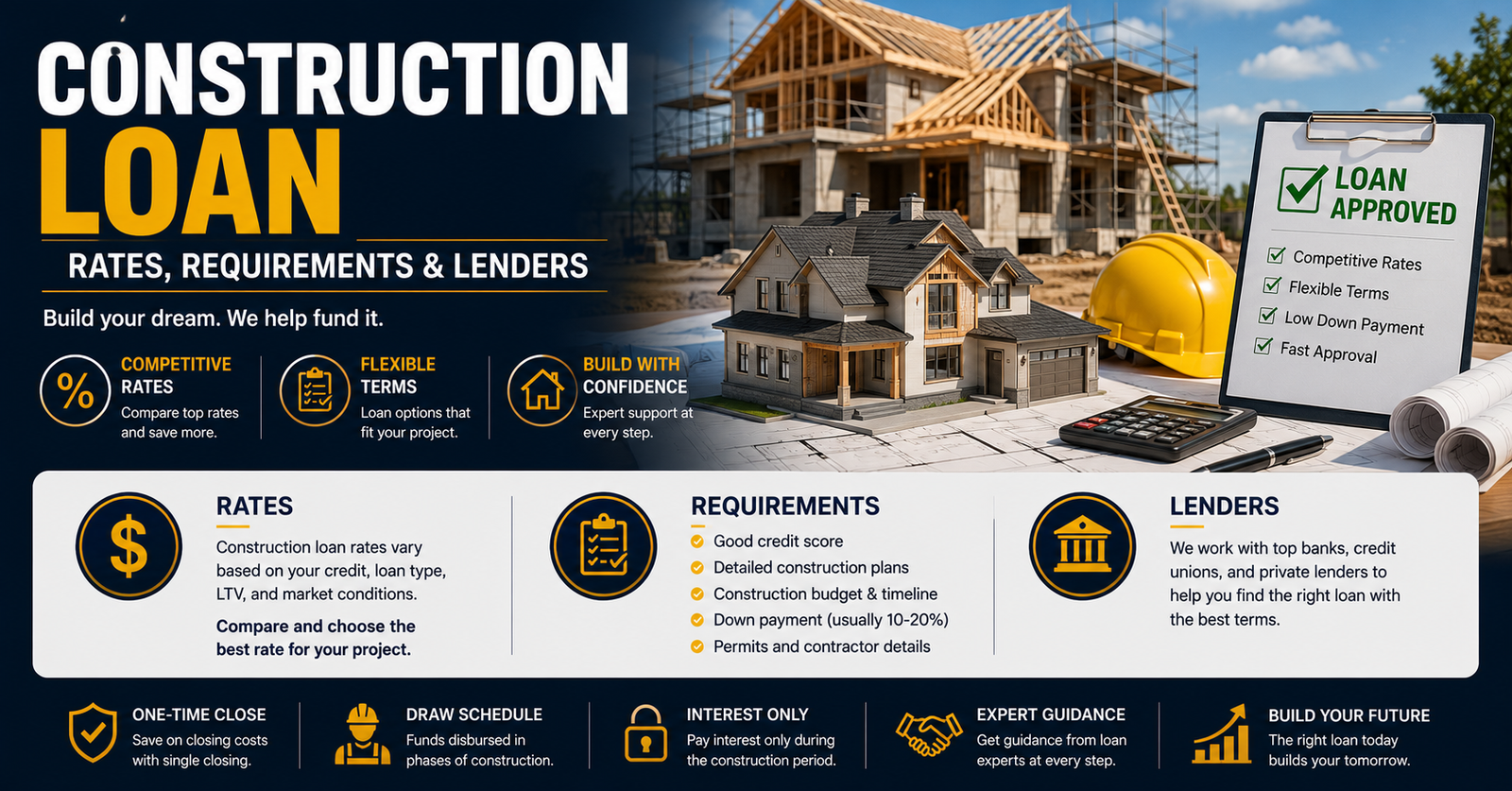
Lenders evaluate the “three C’s” plus project viability:
- Credit score and history
- Debt-to-income (DTI) ratio
- Income stability and reserves
- Collateral (future home value via appraisal)
- Builder experience and detailed plans/budget
The Construction Loan Application Process
- Prequalification: Share financials and project overview.
- Application: Submit detailed plans, builder contract, budget, and personal docs.
- Documentation & Review: Lender verifies everything.
- Underwriting & Appraisal: Assess borrower risk and projected home value.
- Approval & Closing: Sign documents; funds available for draws.
- Funding & Monitoring: Periodic inspections trigger draws. Convert to permanent mortgage at completion.
Risk Management & Responsible Borrowing
- Build in a 15-20% contingency for overruns.
- Improve credit and lower DTI before applying.
- Work with experienced, licensed builders.
- Understand interest-only payments during construction increase total costs.
- Have cash reserves for unexpected delays.
FAQ
What credit score is needed for a construction loan?
Most lenders prefer 680+, with 740+ for best rates.
How much down payment is required?
Typically 20-25% of the total project cost.
Are construction loan rates higher than mortgages?
Yes, usually by 1-2% due to higher risk during the build phase.
What documents are needed?
Building plans, contractor bids, budget, proof of income, credit history, and land details.
Can I get a construction loan with bad credit?
It’s challenging; options may be limited or more expensive.
How long does approval take?
Several weeks to months, longer than standard mortgages due to project complexity.
Do construction loans require a builder?
Yes, lenders typically require a licensed, experienced general contractor.
What happens after construction ends?
The loan converts to a permanent mortgage (in one-time close loans).
Are there fees involved?
Yes, including origination fees, closing costs, and inspection fees.
Can I use a construction loan for renovations?
Yes, renovation loans like Fannie Mae HomeStyle or FHA 203(k) exist.
Related Topics
- First Time Home Buyer Loan
- Home Loan Guide
- Investment Property Loan
- Best Mortgage Lender
- Commercial Real Estate Loan
Evaluating a construction loan requires careful planning. Prequalify with multiple lenders and consult professionals to ensure the project aligns with your financial goals.