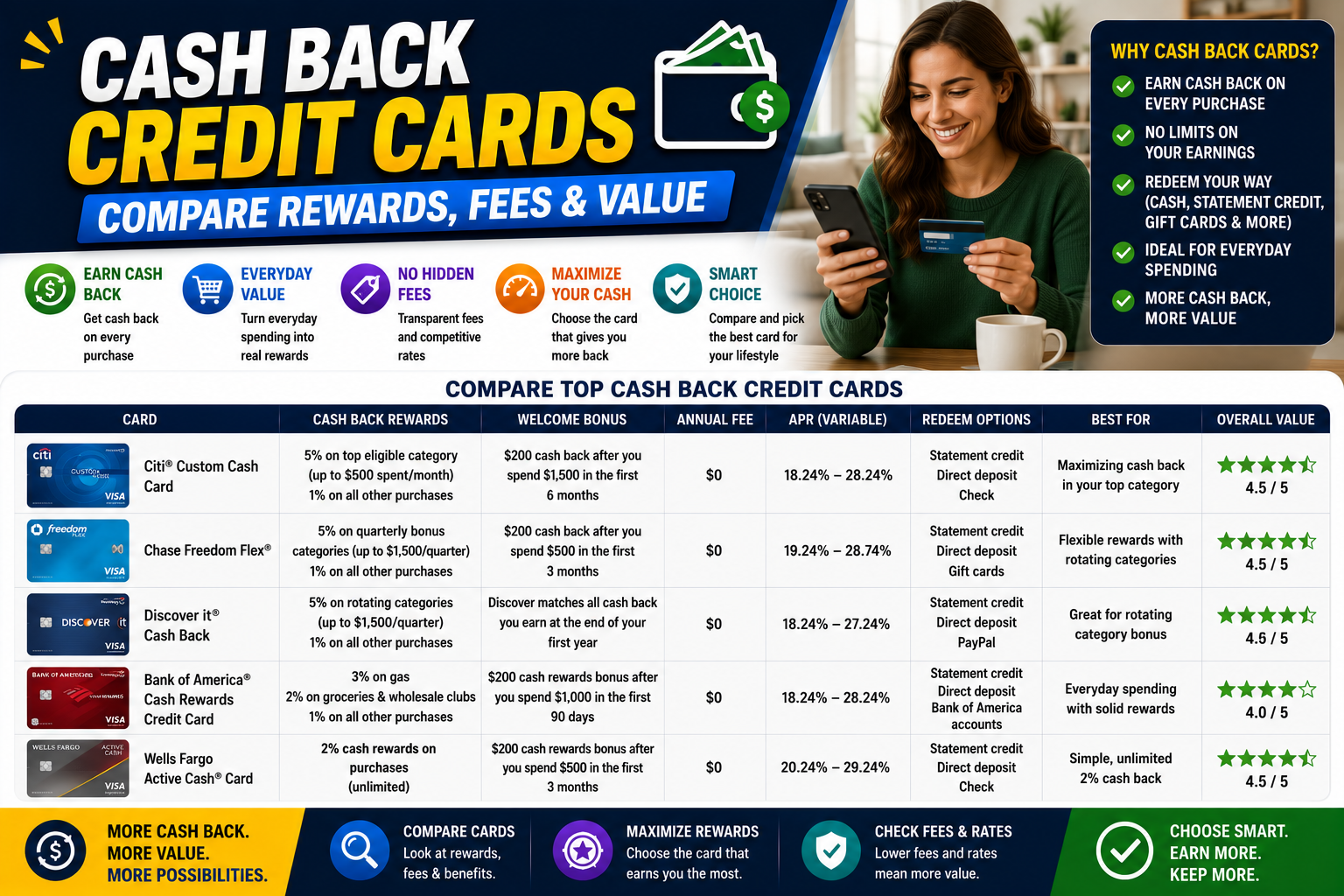
Cash back credit cards remain among the most popular credit card products because they offer a simple way to earn rewards on everyday spending. Unlike travel cards that rely on points or airline miles, cash back cards provide direct value through statement credits, deposits, checks, or reward balances that can be redeemed for cash.
The best cash back credit card depends on spending habits, reward preferences, annual fee tolerance, and credit profile. Some cards offer flat-rate rewards on every purchase, while others provide higher earnings in specific categories such as groceries, dining, gas stations, travel, or online shopping.
Cash Back Credit Cards | Compare Rewards, Fees & Value
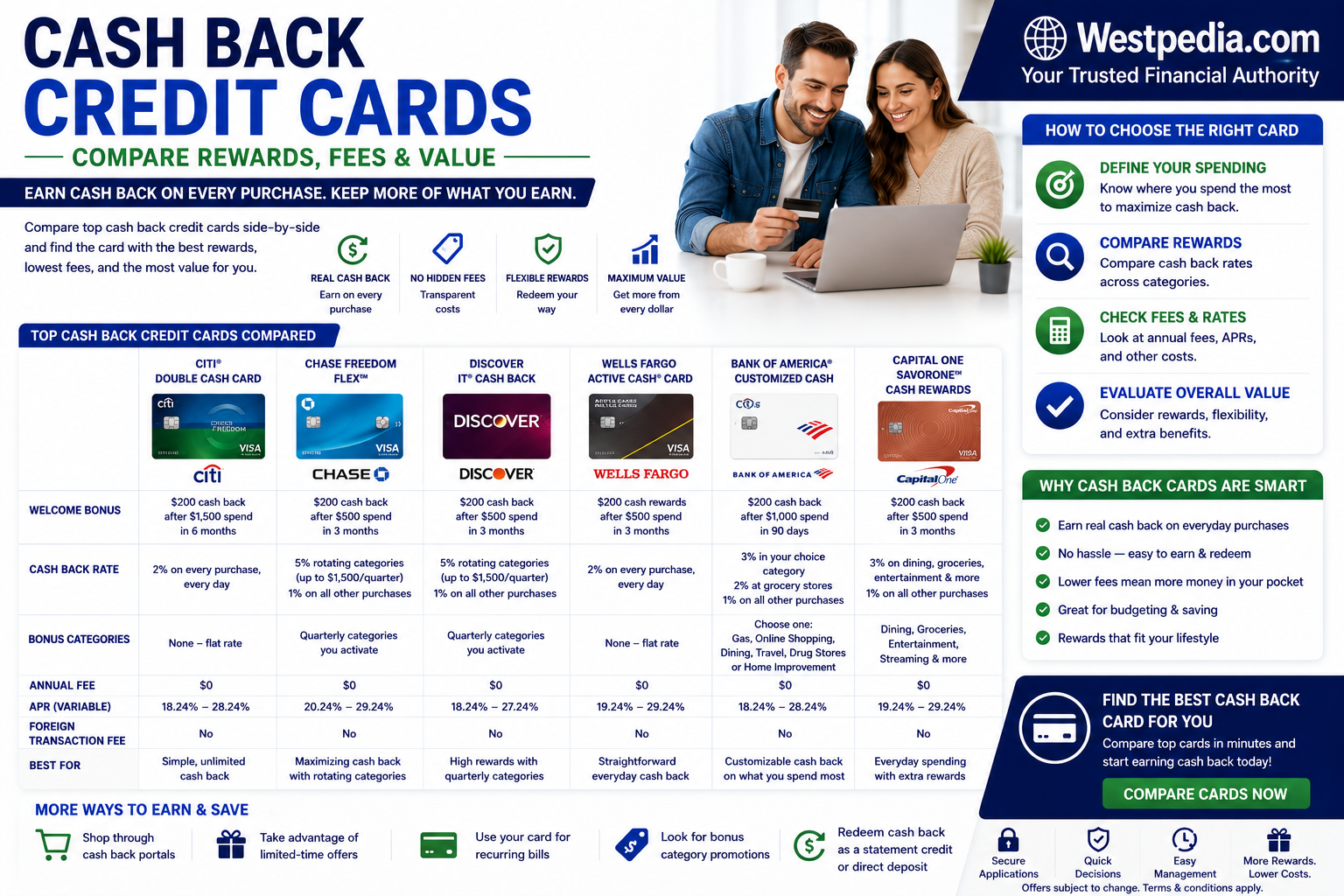
Cash back credit cards allow cardholders to earn a percentage of spending back as rewards. Typical reward structures include:
- Flat-rate cash back on all purchases
- Tiered rewards by category
- Rotating bonus categories
- Customized spending categories
- Welcome bonus offers
- Statement credit rewards
Because redemption is generally simple, cash back cards are often attractive to consumers seeking straightforward rewards without tracking airline or hotel loyalty programs. Individuals and business owners with larger financing needs may also explore a Hard Money Loan as an alternative funding option for certain real estate or short-term investment opportunities.
Best Cash Back Credit Cards by User Type
| User Type | Best Reward Structure | Primary Benefit |
|---|---|---|
| Families | Groceries + Everyday Spending | Higher household rewards |
| Frequent Shoppers | Flat-Rate Cash Back | Simple earnings |
| Travelers | Travel Cash Back | Flexible rewards |
| Students | No Annual Fee Cash Back | Low-cost rewards |
| High Spenders | Premium Cash Back Cards | Enhanced earning potential |
| Business Owners | Business Cash Back Cards | Rewards on company expenses |
What Financial Need Do Cash Back Credit Cards Solve?
Cash back credit cards help consumers earn value from routine purchases that would occur regardless of the payment method used.
Common use cases include:
- Groceries
- Dining
- Fuel purchases
- Streaming subscriptions
- Online shopping
- Travel expenses
- Utility payments
Instead of accumulating travel points or miles, cardholders receive rewards that are generally easier to understand and redeem.
How Cash Back Credit Cards Work
Every qualifying purchase earns rewards according to the card’s reward structure.
Examples include:
- 2% cash back on all purchases
- 3% on dining and travel
- 5% on rotating categories
- 6% on groceries
Rewards are typically redeemable as:
- Statement credits
- Bank deposits
- Reward balances
- Gift cards
- Online purchases
Cash Back Card Features Comparison Table
| Feature | Details |
|---|---|
| Flat-Rate Rewards | Same reward rate on every purchase |
| Bonus Categories | Higher rewards in selected categories |
| Welcome Bonus | Reward after meeting spending requirement |
| No Annual Fee Options | Lower ownership cost |
| Intro APR Offers | Temporary financing benefit |
| Purchase Protection | Coverage for eligible purchases |
| Extended Warranty | Additional product protection |
| Fraud Protection | Security against unauthorized use |
Rewards Breakdown
Cash back earnings vary based on spending categories and card structure.
| Reward Category | Typical Earnings Rate |
|---|---|
| General Purchases | 1%–2% |
| Dining | 2%–5% |
| Groceries | 2%–6% |
| Gas Stations | 2%–5% |
| Travel | 2%–5% |
| Online Shopping | 2%–5% |
Realistic Annual Reward Example
| Category | Annual Spend | Reward Rate | Estimated Reward |
|---|---|---|---|
| Groceries | $8,000 | 4% | $320 |
| Dining | $4,000 | 3% | $120 |
| Gas | $3,000 | 3% | $90 |
| General Spending | $10,000 | 2% | $200 |
Total estimated annual rewards: $730.
Actual rewards depend on spending patterns and issuer terms.
First-Year Value Example
| Component | Estimated Value |
|---|---|
| Welcome Bonus | $250 |
| Annual Cash Back | $730 |
| Statement Credits | $100 |
| Annual Fee | -$95 |
| Estimated Net Value | $985 |
Cash Back vs Travel Rewards
| Feature | Cash Back Cards | Travel Rewards Cards |
|---|---|---|
| Redemption Simplicity | High | Medium |
| Flexibility | High | Medium to High |
| Potential Value | Moderate | Potentially Higher |
| Complexity | Low | Higher |
| Annual Fees | Often Lower | Often Higher |
Fees and APR Explained
Annual Fee
- No annual fee cards: $0
- Mid-tier rewards cards: $95–$150
- Premium cash back cards: $150+
APR Range
Most cash back cards carry variable APRs ranging approximately from 18% to 35%, depending on creditworthiness and market conditions.
Intro APR Offers
Some cash back cards offer temporary 0% APR periods on purchases and balance transfers.
Balance Transfer Fees
Typically 3%–5% of the transferred amount.
Foreign Transaction Fees
Often 0%–3% depending on issuer.
Late Fees and Cash Advance Fees
These fees vary by card issuer and account agreement.
Credit Score Requirements
| Credit Profile | Typical FICO Range | Approval Outlook |
|---|---|---|
| Poor | 300–579 | Limited options |
| Fair | 580–669 | Entry-level rewards cards |
| Good | 670–739 | Broad card availability |
| Very Good | 740–799 | Enhanced rewards opportunities |
| Excellent | 800–850 | Premium rewards products |
Issuer Comparison Table
| Issuer | Best For | Typical Credit Needed |
|---|---|---|
| Chase | Flexible rewards | Good to Excellent |
| American Express | Premium rewards | Good to Excellent |
| Capital One | Flat-rate cash back | Fair to Excellent |
| Citi | Everyday spending rewards | Good to Excellent |
| Discover | Credit building and rewards | Fair to Good |
| Bank of America | Relationship bonuses | Good to Excellent |
| Wells Fargo | Simple cash rewards | Good to Excellent |
Issuer Insights
Chase
Strengths: Flexible redemption options and strong rewards ecosystem.
Weaknesses: Approval standards can be competitive.
American Express
Strengths: Premium benefits and elevated category rewards.
Weaknesses: Some products carry higher annual fees.
Capital One
Strengths: Straightforward rewards structures.
Weaknesses: Premium benefit options may be more limited.
Citi
Strengths: Strong everyday earning potential.
Weaknesses: Benefits vary significantly by card.
Discover
Strengths: Accessible products and simple rewards.
Weaknesses: Smaller card portfolio.
Approval Factors
- Credit score
- Payment history
- Credit utilization ratio
- Debt-to-income ratio
- Income verification
- Existing credit accounts
- Recent inquiries
- Credit history length
Approval Process
1. Application Submission
Consumers submit personal and financial information.
2. Credit Review
The issuer evaluates credit reports and risk indicators.
3. Underwriting Assessment
Eligibility and repayment capacity are assessed.
4. Approval or Denial
The issuer determines whether to extend credit.
5. Card Issuance
Approved applicants receive their card.
6. Activation
The card must be activated before use.
How to Maximize Cash Back Rewards
- Match spending to bonus categories
- Use category-specific cards strategically
- Redeem rewards efficiently
- Monitor promotional offers
- Pay balances in full whenever possible
Benefits vs Risks
Benefits
- Simple rewards structure
- Flexible redemption options
- Purchase protections
- Potential welcome bonuses
- No travel booking requirements
Risks
- High APR costs when carrying balances
- Overspending to chase rewards
- Annual fees may reduce value
- Missed payments can harm credit scores
Alternatives to Consider
- Travel rewards credit cards
- Airline credit cards
- Hotel rewards cards
- Balance transfer cards
- Low-interest credit cards
Consumers should compare rewards, fees, and redemption flexibility before selecting a card.
Expert Considerations
Cash back cards are often most valuable for consumers seeking straightforward rewards without managing airline miles or travel transfer partners. However, users who travel frequently may find greater value from travel rewards programs. Compare annual fees, reward structures, welcome bonuses, and redemption options carefully before applying.
Approval is not guaranteed. APRs, rewards, welcome bonuses, and promotional offers may change. Consumers should review official issuer disclosures before applying.
Frequently Asked Questions
1. What is a cash back credit card?
A card that returns a percentage of eligible spending as rewards.
2. Are cash back rewards taxable?
In many situations, rewards are treated as rebates, though tax treatment varies.
3. What credit score is needed?
Requirements vary by issuer and card product.
4. Can I earn unlimited cash back?
Some cards offer unlimited rewards while others impose category caps.
5. Are annual fees worth paying?
They may be if rewards exceed total costs.
6. Do cash back rewards expire?
Expiration policies vary by issuer.
7. What is a flat-rate cash back card?
A card that pays the same reward percentage on all purchases.
8. Can rewards be redeemed as cash?
Many issuers allow direct cash redemption.
9. Do applications affect credit scores?
Applications often result in hard inquiries that may temporarily impact scores.
10. How long does approval take?
Some decisions are instant while others require manual review.
11. What happens if I carry a balance?
Interest charges may reduce or eliminate reward value.
12. Are foreign transaction fees common?
Many cards charge them, although some do not.
Related Topics
- Best Cash Back Credit Cards
- How Credit Scores Affect Approval
- Balance Transfer Credit Cards
- Travel Rewards Programs
- Credit Card APR Explained