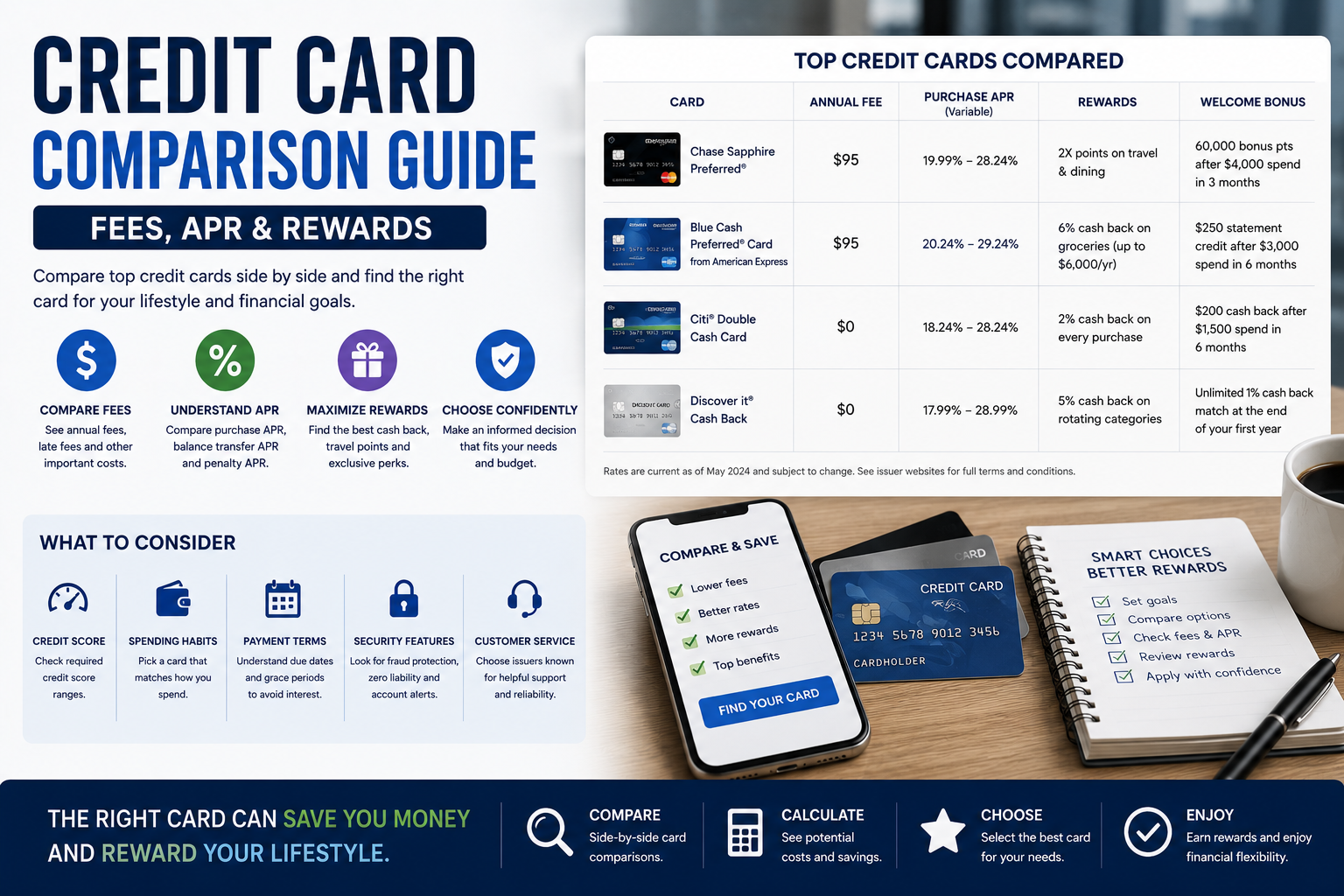
Credit Card Comparison Guide and How to Compare Rewards, APRs, Fees & Benefits. Choosing a credit card is more than selecting the product with the largest welcome bonus or highest rewards rate. A proper credit card comparison evaluates costs, benefits, credit requirements, and long-term value.
With hundreds of credit cards available, consumers should compare cards based on their spending habits, borrowing needs, and financial goals. The best card for a frequent traveler may not suit someone seeking low interest rates or simple cash back rewards.
Overview
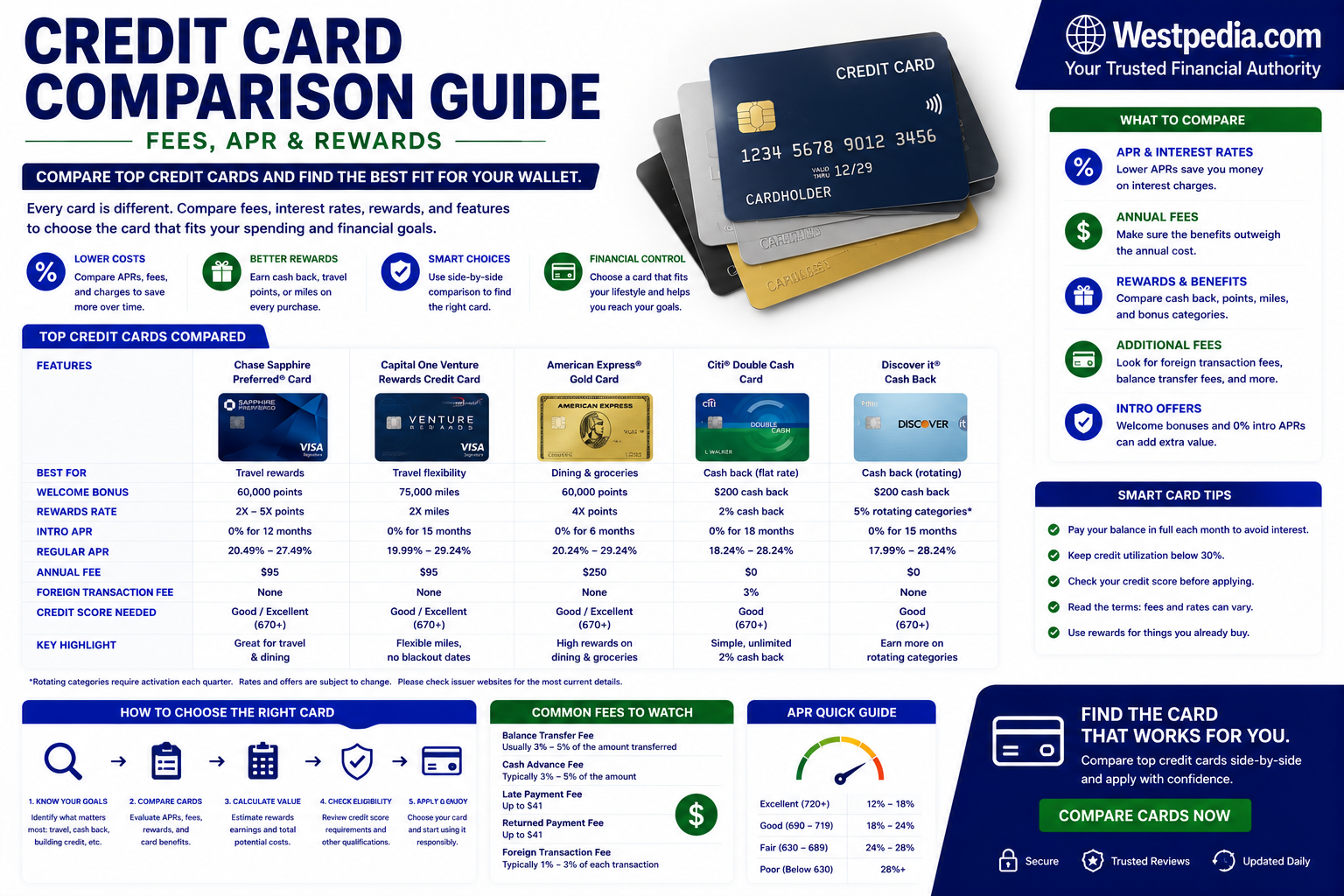
A credit card comparison helps consumers evaluate multiple cards side by side before submitting an application. Key comparison factors include:
- Annual fees
- APR ranges
- Welcome bonuses
- Rewards programs
- Introductory APR offers
- Foreign transaction fees
- Credit score requirements
- Travel and purchase protections
Comparing these factors can help reduce borrowing costs and improve reward value over time.
What Financial Need Does Credit Card Comparison Solve?
Credit card comparisons help consumers:
- Identify cards aligned with spending patterns.
- Avoid unnecessary fees.
- Maximize rewards potential.
- Find lower borrowing costs.
- Understand qualification requirements.
- Select cards appropriate for their credit profile.
Because card terms vary significantly, comparing offers before applying may improve overall financial outcomes.
Types of Credit Cards to Compare
| Card Type | Primary Purpose |
|---|---|
| Cash Back Cards | Earn cash rewards on purchases |
| Travel Cards | Earn points or miles |
| Balance Transfer Cards | Reduce interest on existing debt |
| Business Cards | Separate and manage business expenses |
| Student Cards | Build credit history |
| Secured Cards | Establish or rebuild credit |
| Low Interest Cards | Minimize financing costs |
Credit Card Features Comparison Table
| Feature | Details |
|---|---|
| Annual Fee | Yearly cost to maintain the account |
| APR | Interest charged on unpaid balances |
| Welcome Bonus | Reward earned after meeting spending requirements |
| Intro APR Offer | Temporary promotional interest rate |
| Rewards Program | Cash back, points, or miles earned |
| Foreign Transaction Fee | Charge on purchases made outside the U.S. |
| Purchase Protection | Coverage for eligible purchases |
| Travel Benefits | Insurance, lounge access, and travel credits |
How to Compare Credit Cards
1. Evaluate Annual Fees
Annual fees can range from $0 to more than $700. Consumers should determine whether expected rewards and benefits exceed the annual cost.
| Annual Fee Level | Typical Range | Common Features |
|---|---|---|
| No Annual Fee | $0 | Basic rewards and lower costs |
| Mid-Tier | $95–$150 | Enhanced rewards and benefits |
| Premium | $250+ | Luxury travel perks and credits |
2. Compare APRs
Consumers who carry balances should prioritize APR because interest charges can significantly increase borrowing costs.
- Purchase APR
- Balance Transfer APR
- Cash Advance APR
- Penalty APR
Most variable APRs currently range from approximately 18% to 35%, depending on creditworthiness.
3. Compare Rewards Programs
| Reward Category | Typical Earnings Rate |
|---|---|
| General Spending | 1%–2% |
| Dining | 2%–5% |
| Travel | 2x–5x points |
| Groceries | 2%–6% |
| Gas Stations | 2%–5% |
| Online Shopping | 2%–5% |
Rewards Value Example
| Annual Spending Category | Spend | Reward Rate | Estimated Reward |
|---|---|---|---|
| Groceries | $8,000 | 4% | $320 |
| Dining | $5,000 | 3% | $150 |
| Gas | $3,000 | 3% | $90 |
| Other Purchases | $12,000 | 2% | $240 |
Estimated annual rewards: $800.
Fees and Total Cost of Ownership
Beyond annual fees, consumers should compare additional costs.
| Fee Type | Typical Range |
|---|---|
| Annual Fee | $0–$700+ |
| Balance Transfer Fee | 3%–5% |
| Cash Advance Fee | 3%–5% |
| Foreign Transaction Fee | 0%–3% |
| Late Payment Fee | Issuer dependent |
Consumers who routinely carry balances should also estimate annual interest expenses.
Credit Score Requirements
| Credit Profile | Typical FICO Range | Approval Outlook |
|---|---|---|
| Poor | 300–579 | Limited options |
| Fair | 580–669 | Entry-level rewards products |
| Good | 670–739 | Broad selection available |
| Very Good | 740–799 | Enhanced approval opportunities |
| Excellent | 800–850 | Premium products available |
Issuer Comparison Table
| Issuer | Best For | Typical Credit Needed |
|---|---|---|
| Chase | Travel and flexible rewards | Good to Excellent |
| American Express | Premium rewards and travel perks | Good to Excellent |
| Capital One | Simple rewards structures | Fair to Excellent |
| Citi | Everyday rewards and balance transfers | Good to Excellent |
| Discover | Credit building and cash back | Fair to Good |
| Bank of America | Relationship rewards | Good to Excellent |
| Wells Fargo | Flat-rate rewards | Good to Excellent |
Issuer Insights
Chase
Strengths: Strong travel ecosystem and transferable rewards.
Weaknesses: Competitive approval standards.
American Express
Strengths: Premium benefits and customer service.
Weaknesses: Some cards carry substantial annual fees.
Capital One
Strengths: Straightforward rewards programs.
Weaknesses: Premium portfolio smaller than some competitors.
Citi
Strengths: Strong balance transfer products.
Weaknesses: Benefits vary considerably by card.
Discover
Strengths: Accessible products and rotating rewards.
Weaknesses: Smaller card lineup.
Application and Underwriting Factors
- Credit score
- Payment history
- Credit utilization ratio
- Debt-to-income ratio
- Recent credit inquiries
- Existing credit accounts
- Length of credit history
- Income verification
Credit Card Approval Process
1. Application Submission
The consumer submits financial and personal information.
2. Credit Review
The issuer reviews credit reports and scoring models.
3. Underwriting Assessment
Income, debt, and repayment capacity are evaluated.
4. Approval or Denial
The issuer decides whether to extend credit.
5. Card Issuance Timeline
Approved applicants typically receive cards within several business days.
6. Activation Process
The card must be activated before use.
How to Improve Approval Odds
- Maintain on-time payments.
- Reduce credit utilization.
- Avoid excessive applications.
- Review credit reports regularly.
- Apply for cards appropriate for your credit profile.
How to Avoid Interest Charges
- Pay statement balances in full.
- Make payments before due dates.
- Limit carrying revolving balances.
- Monitor promotional APR expiration dates.
Benefits vs Risks
Benefits
- Rewards and welcome bonuses
- Convenient purchasing power
- Fraud protection
- Credit building opportunities
- Purchase and travel protections
Risks
- High APR costs
- Overspending
- Debt accumulation
- Potential credit score damage
- Annual and transaction fees
Alternatives to Consider
- Cash back cards for everyday spending.
- Travel cards for frequent travelers.
- Balance transfer cards for debt repayment.
- Secured cards for building credit.
- Low-interest cards for financing purchases.
Expert Considerations
No credit card is ideal for every consumer. The most suitable card depends on spending habits, financial goals, and borrowing behavior. Consumers should compare fees, rewards, APRs, and eligibility requirements carefully before applying.
Approval is not guaranteed. APRs, promotional offers, and rewards programs may change at any time. Always review official issuer disclosures before submitting an application.
Frequently Asked Questions
1. Why should I compare credit cards?
Comparing cards helps identify products aligned with your financial needs and spending habits.
2. What factors are most important?
APR, annual fees, rewards, benefits, and credit requirements are among the most important factors.
3. Does comparing cards affect credit scores?
No. Comparing offers does not affect credit scores unless you formally apply.
4. What credit score is needed for rewards cards?
Many rewards cards require good to excellent credit.
5. Are no annual fee cards worthwhile?
They may provide substantial value for many consumers.
6. What is an introductory APR?
A temporary promotional interest rate offered for a limited period.
7. Can I have multiple credit cards?
Yes, provided accounts are managed responsibly.
8. What is a balance transfer fee?
It is a fee charged when moving debt from one card to another.
9. How long does approval take?
Some applications receive instant decisions, while others require manual review.
10. What happens if my application is denied?
Issuers typically provide an adverse action notice explaining major reasons.
11. Should I prioritize rewards or low APR?
Consumers who carry balances may benefit more from lower APRs than rewards.
12. Are premium cards worth their annual fees?
They can be valuable if benefits and rewards exceed annual costs.
Related Topics
- Best Cash Back Credit Cards
- Best Credit Cards for Business
- Best Credit Cards Guide
- Travel Rewards Programs
- Credit Card APR Explained