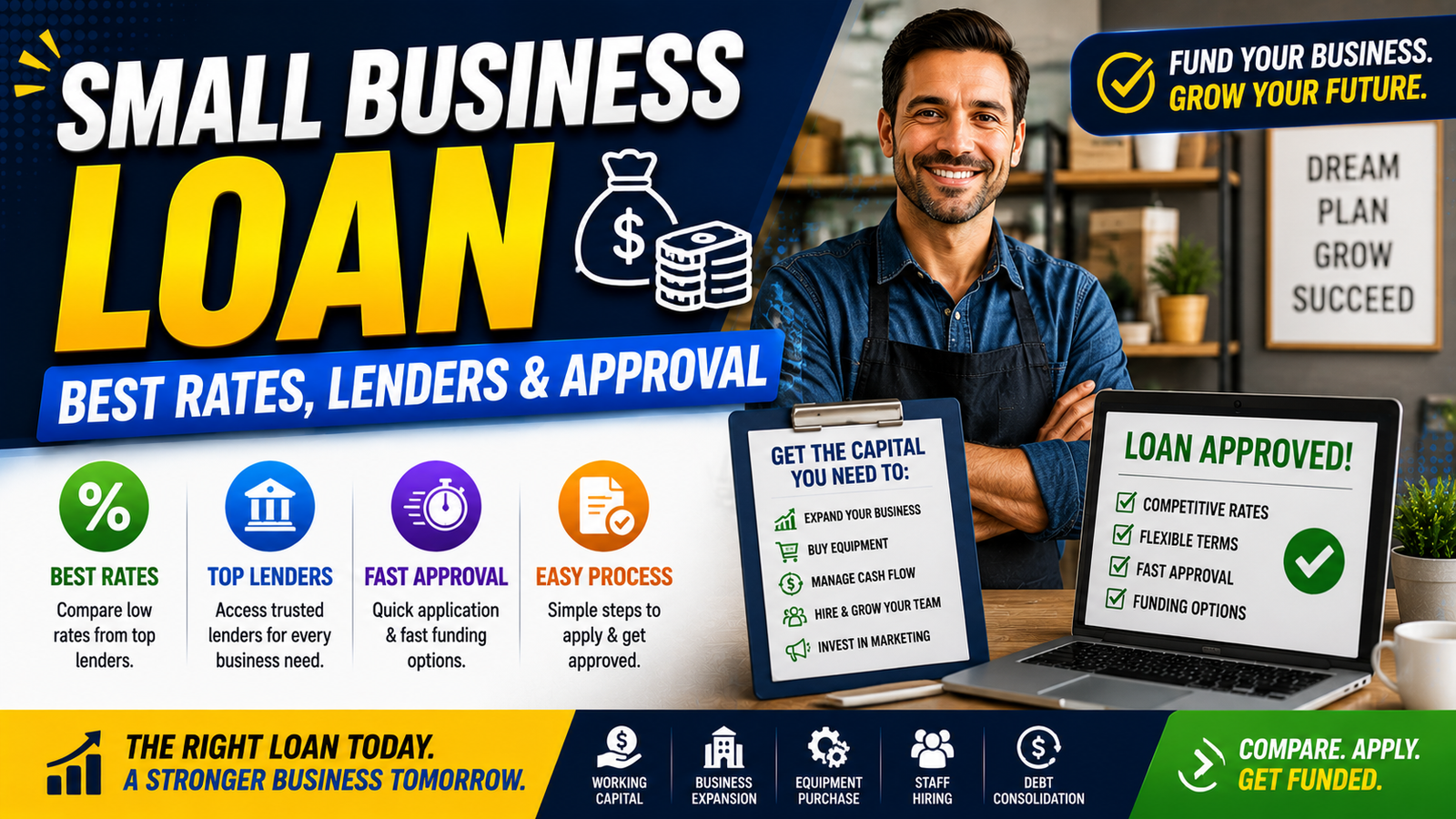
Access to capital is one of the most important factors influencing the growth and stability of small businesses. Whether a company needs funding to purchase inventory, hire employees, acquire equipment, expand operations, or manage temporary cash-flow gaps, a Small Business Loan can provide the financial resources needed to achieve business objectives.
However, not all business loans are the same. Loan costs, qualification requirements, funding speed, repayment terms, and lender expectations vary significantly. Understanding how small business loans work can help business owners make informed borrowing decisions and avoid unnecessary financing costs.

What Is a Small Business Loan?
A Small Business Loan is financing provided by banks, credit unions, online lenders, SBA-approved lenders, or alternative financing companies to help businesses fund operations, growth initiatives, or capital expenditures.
Businesses commonly use loan proceeds for:
- Working capital
- Inventory purchases
- Equipment acquisition
- Business expansion
- Commercial real estate
- Debt refinancing
- Payroll expenses
- Marketing campaigns
- Technology investments
- Emergency cash-flow needs
The best financing option depends on the company’s financial position, borrowing needs, and repayment capacity.
Who Should Consider a Small Business Loan?
Small business financing may be suitable for:
- Established small businesses
- Growing companies
- Seasonal businesses
- Retail businesses
- E-commerce companies
- Professional service firms
- Construction contractors
- Manufacturing businesses
- Healthcare practices
- Franchise operators
Business owners should evaluate whether projected revenue growth or operational benefits justify the cost of borrowing.
What Financial Problems Does a Small Business Loan Solve?
Small business loans are commonly used to address:
- Cash-flow shortages
- Inventory financing needs
- Equipment replacement costs
- Business expansion projects
- Unexpected operating expenses
- Seasonal revenue fluctuations
- Commercial property purchases
- Debt consolidation opportunities
- Hiring and payroll needs
- Growth-related capital requirements
Small Business Loan Costs, Rates & Terms
| Loan Feature | Typical Range |
|---|---|
| Loan Amount | $5,000 – $5,000,000+ |
| APR | 6% – 60%+ |
| Repayment Terms | 3 Months – 25 Years |
| Origination Fees | 0% – 8% |
| Closing Costs | May Apply |
| Funding Timeline | Same Day – 90 Days |
Actual financing costs depend on the lender, business financials, industry risk, credit quality, collateral, and loan structure.
Estimated Monthly Payment Examples
| Loan Amount | APR | Term | Approximate Monthly Payment |
|---|---|---|---|
| $25,000 | 10% | 5 Years | $531 |
| $50,000 | 9% | 7 Years | $804 |
| $100,000 | 8% | 10 Years | $1,213 |
Monthly payments vary based on final APR, fees, and repayment terms.
Small Business Loan Types Compared
| Loan Type | Best For | Typical Amount | Collateral | Term Length |
|---|---|---|---|---|
| SBA Loan | Long-term growth | $50,000–$5M+ | Often Required | 5–25 Years |
| Business Term Loan | Expansion Projects | $10,000–$2M+ | Sometimes | 1–10 Years |
| Business Line of Credit | Working Capital | $5,000–$500,000+ | Usually Not | Revolving |
| Equipment Financing | Equipment Purchases | $10,000–$1M+ | Equipment Secures Loan | 2–10 Years |
| Commercial Mortgage | Property Acquisition | $100,000–$10M+ | Property Required | 10–25 Years |
| Working Capital Loan | Short-Term Needs | $5,000–$500,000 | Often Not Required | 3–36 Months |
Best Small Business Loan Lenders Compared
| Lender | Best For | Key Strength | Potential Drawback |
|---|---|---|---|
| Live Oak Bank | SBA Financing | Specialized SBA Expertise | Longer Approval Timelines |
| Funding Circle | Established Businesses | Competitive Term Loans | Revenue Requirements |
| Bluevine | Working Capital | Flexible Credit Lines | May Require Business History |
| OnDeck | Fast Funding | Quick Approval Process | Potentially Higher APRs |
| National Funding | Flexible Qualification | Broader Borrower Profiles | Costs May Exceed Bank Loans |
| Bank of America | Relationship Banking | Multiple Financing Products | Stricter Underwriting |
| Wells Fargo | Traditional Lending | Strong Branch Network | Extensive Documentation |
| Chase | Existing Customers | Business Banking Integration | Competitive Approval Standards |
| U.S. Bank | Small Business Lending | Diverse Loan Products | Availability May Vary |
Lender Positioning Insights
Live Oak Bank
Often considered by businesses seeking SBA-backed financing and long repayment terms.
Funding Circle
May suit established businesses with stable revenue seeking growth capital.
Bluevine
Popular among companies needing flexible access to working capital through revolving credit.
OnDeck
Frequently evaluated by businesses prioritizing funding speed over obtaining the lowest possible rate.
National Funding
Can provide options for borrowers who may not qualify for traditional bank financing.
Traditional Banks
Bank of America, Wells Fargo, Chase, and U.S. Bank may offer competitive rates for highly qualified borrowers but generally apply stricter underwriting standards.
How Small Business Loan Underwriting Works
Before approving financing, lenders assess repayment risk through underwriting.
Credit Score
Business and personal credit scores often play a significant role in approval and pricing.
Credit History
Lenders evaluate repayment performance, delinquencies, collections, and existing obligations.
Debt-to-Income Ratio (DTI)
For owner-guaranteed loans, personal debt levels may influence qualification.
Business Revenue
Stable and growing revenue generally strengthens an application.
Cash Flow
Lenders want evidence that operating income can support loan repayment.
Employment and Business History
Time in business and management experience can improve lender confidence.
Collateral
Assets such as equipment, inventory, vehicles, or real estate may secure financing.
Existing Debt Obligations
High debt levels can reduce approval odds or affect loan terms.
Factors That Influence Business Loan Rates
- Credit score
- Credit history
- Annual revenue
- Profitability
- Cash flow stability
- Industry risk
- Collateral value
- Loan amount requested
- Repayment term length
- Business location
- Economic conditions
Real-World Borrowing Scenarios
Inventory Expansion
A retailer may use a term loan to increase inventory ahead of peak sales seasons.
Equipment Acquisition
A contractor may finance machinery while preserving operating cash reserves.
Cash-Flow Management
A service business may use a line of credit to manage temporary revenue fluctuations.
Business Expansion
A growing company may secure financing to open a new location or expand operations.
Step-by-Step Small Business Loan Application Process
1. Prequalification
Review eligibility requirements and estimate financing options.
2. Application Submission
Provide business and financial information.
3. Documentation Review
- Business tax returns
- Bank statements
- Profit and loss statements
- Balance sheets
- Business licenses
- Formation documents
- Debt schedules
4. Underwriting
The lender reviews financial strength, repayment ability, and risk factors.
5. Approval Decision
Qualified borrowers receive loan offers and disclosures.
6. Funding
Funding timelines vary from same-day financing to several weeks.
How to Improve Approval Odds
- Improve business and personal credit
- Reduce existing debt obligations
- Increase documented revenue
- Maintain organized financial records
- Strengthen cash reserves
- Build lender relationships
- Apply for realistic loan amounts
- Prepare supporting documentation in advance
How to Lower Borrowing Costs
- Compare multiple lender offers
- Improve creditworthiness before applying
- Choose shorter repayment terms when affordable
- Offer collateral when appropriate
- Maintain healthy business financials
- Avoid excessive borrowing
Risks of Small Business Loans
- Cash-flow pressure
- Interest expenses
- Collateral loss risk
- Personal guarantee obligations
- Reduced borrowing flexibility
- Potential refinancing challenges
Responsible borrowing involves evaluating both expected and worst-case repayment scenarios before accepting financing.
State and Regulatory Considerations
Business lending laws vary by state. Interest rate regulations, lender licensing requirements, disclosure standards, and borrower protections may differ by jurisdiction. Certain financing products may not be available in all states.
Frequently Asked Questions
1. What credit score is needed for a small business loan?
Requirements vary by lender, but stronger credit generally improves approval opportunities.
2. How much can I borrow?
Loan amounts depend on revenue, credit quality, collateral, and lender policies.
3. Are SBA loans good for small businesses?
SBA loans may provide competitive terms for qualified borrowers seeking long-term financing.
4. How long does approval take?
Approval may take anywhere from hours to several weeks depending on the lender.
5. What is APR?
APR reflects the annual cost of borrowing, including interest and certain fees.
6. Do business loans require collateral?
Some loans require collateral, while unsecured options also exist.
7. Can new businesses qualify?
Some lenders finance newer businesses, though requirements may be stricter.
8. What documents are typically required?
Tax returns, financial statements, bank records, and business formation documents are commonly requested.
9. What is a business line of credit?
A revolving financing facility that allows businesses to borrow as needed.
10. Can business loans be refinanced?
Many businesses refinance to improve terms or lower borrowing costs.
11. What are origination fees?
Origination fees are charges some lenders assess for processing and funding loans.
12. How do lenders evaluate cash flow?
Lenders analyze revenue, expenses, profitability, and repayment capacity.
13. Is equipment financing easier to qualify for?
Because equipment serves as collateral, qualification can sometimes be more accessible.
14. Should I compare multiple lenders?
Yes. Comparing offers helps identify suitable rates, fees, and loan structures.
15. Can bad credit affect approval?
Yes. Credit quality often influences approval decisions and loan pricing.
Related Topics
- SBA Loan Requirements
- Startup Business Loan
- Working Capital Loans Explained
- Equipment Financing for Small Businesses
- Commercial Real Estate Loans
- Business Credit Score Improvement
- Debt Consolidation for Businesses