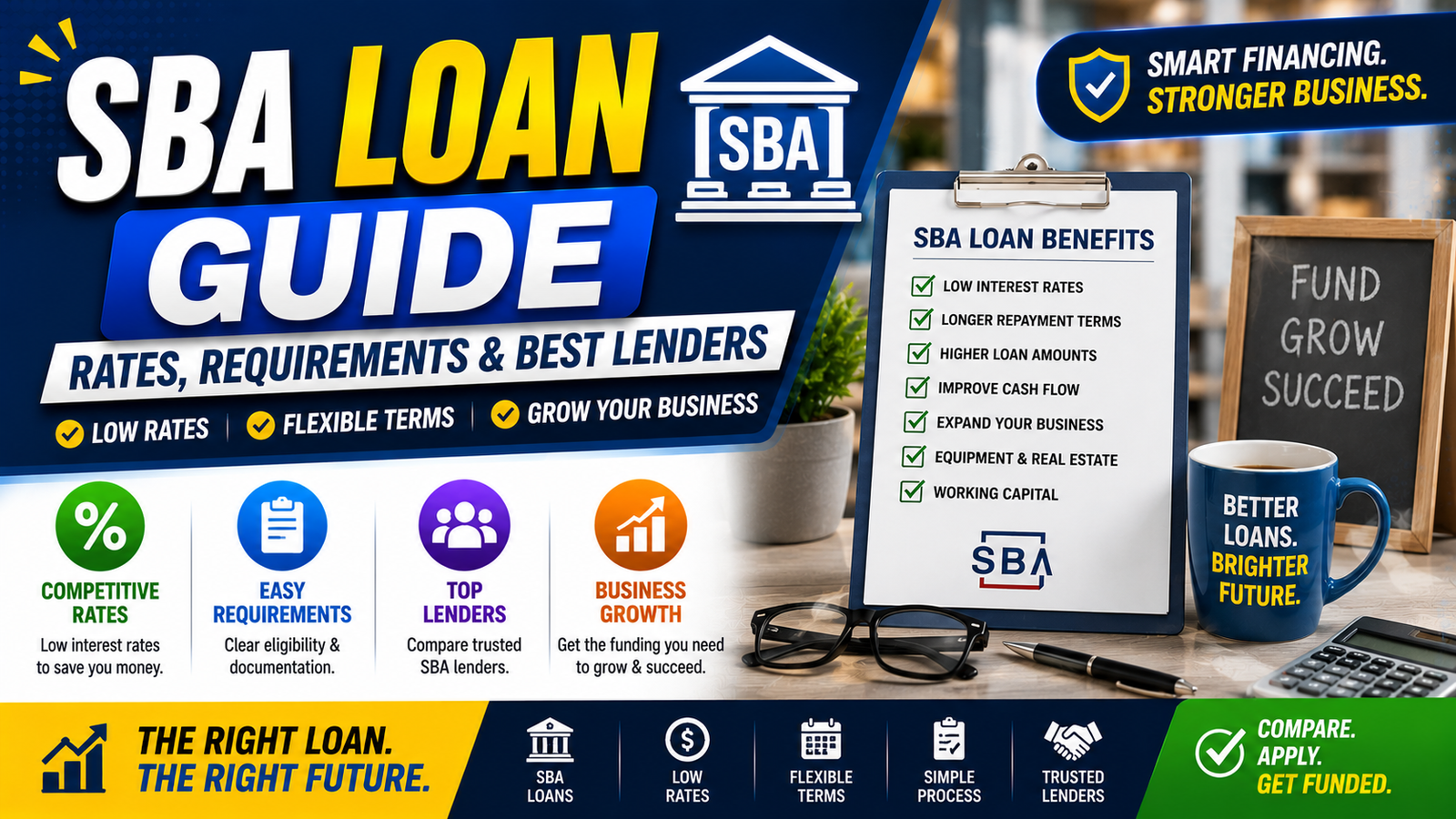
An SBA Loan is one of the most sought-after financing options available to small businesses. Backed by the U.S. Small Business Administration (SBA), these loans help reduce lender risk, making it easier for qualified businesses to access funding with competitive rates and longer repayment terms.
Whether you need working capital, expansion funding, equipment financing, commercial real estate financing, or business acquisition funding, SBA loans often provide more favorable borrowing terms than many conventional and alternative lending products.
However, SBA financing is not necessarily easier to obtain. Borrowers must satisfy eligibility requirements, provide extensive documentation, and successfully complete a detailed underwriting process.

What Is an SBA Loan?
An SBA Loan is a business loan partially guaranteed by the U.S. Small Business Administration and issued through approved lenders such as banks, credit unions, and specialized SBA lending institutions.
The SBA does not usually lend money directly. Instead, it guarantees a portion of the loan, helping lenders offer financing to qualified small businesses.
Common SBA loan uses include:
- Working capital
- Inventory purchases
- Equipment financing
- Business expansion
- Commercial real estate acquisition
- Debt refinancing
- Business acquisition financing
- Construction projects
- Operating expenses
What Financial Problems Does an SBA Loan Solve?
SBA financing can help businesses overcome several challenges:
- Limited access to traditional credit
- High borrowing costs from alternative lenders
- Insufficient working capital
- Expansion funding needs
- Commercial property financing requirements
- Equipment acquisition costs
- Business acquisition opportunities
- Long-term growth capital requirements
The primary advantage is access to financing with repayment terms that may better align with long-term business growth.
Who Should Consider an SBA Loan?
SBA loans may be suitable for:
- Established small businesses
- Growing companies
- Business acquisition buyers
- Franchise operators
- Professional practices
- Manufacturing companies
- Retail businesses
- Construction firms
- Service businesses
- Commercial property buyers
Borrowers should have a clear business purpose, stable financial performance, and the ability to demonstrate repayment capacity.
SBA Loan Rates, Costs & Terms
| Loan Feature | Typical Range |
|---|---|
| Loan Amount | $5,000 – $5,000,000+ |
| APR | Approximately 6% – 15% |
| Repayment Terms | 5 – 25 Years |
| Origination Fees | Varies by lender |
| SBA Guarantee Fees | May Apply |
| Closing Costs | Possible on certain loans |
| Funding Timeline | 2 – 12 Weeks |
Actual rates and fees vary based on SBA program type, lender policies, borrower qualifications, collateral, and market conditions.
Estimated Monthly Payment Examples
| Loan Amount | APR | Term | Approximate Monthly Payment |
|---|---|---|---|
| $50,000 | 8% | 10 Years | $607 |
| $100,000 | 8% | 10 Years | $1,213 |
| $250,000 | 8% | 15 Years | $2,389 |
Major SBA Loan Programs Compared
| Program | Best For | Maximum Amount | Typical Term |
|---|---|---|---|
| SBA 7(a) | General business purposes | $5 Million | Up to 25 Years |
| SBA 504 | Commercial real estate & equipment | Varies | 10–25 Years |
| SBA Microloan | Small financing needs | $50,000 | Up to 6 Years |
| SBA Express | Faster decisions | Varies | Up to 10 Years |
| CAPLines | Working capital | Varies | Revolving |
SBA Loan Types vs Other Financing Options
| Financing Type | Best For | Collateral | Rate Potential | Funding Speed |
|---|---|---|---|---|
| SBA Loan | Long-term financing | Often Required | Generally Competitive | Moderate |
| Business Term Loan | Growth projects | Sometimes | Varies | Moderate |
| Business Line of Credit | Working capital | Usually Not | Variable | Fast |
| Equipment Financing | Equipment purchases | Equipment Secures Loan | Competitive | Moderate |
| Commercial Mortgage | Property acquisition | Property Required | Competitive | Slower |
Best SBA Loan Lenders Compared
| Lender | Best For | Strength | Potential Limitation |
|---|---|---|---|
| Live Oak Bank | SBA Specialists | High SBA lending volume | Detailed underwriting |
| Bank of America | Existing Business Customers | Large banking platform | Strict qualifications |
| Wells Fargo | Relationship Banking | Broad lending products | Documentation requirements |
| Chase | Established Businesses | National banking network | Competitive underwriting |
| U.S. Bank | Small Business Borrowers | Diverse financing solutions | Regional availability factors |
| Funding Circle | Alternative Business Financing | Term loan flexibility | Not an SBA specialist |
| Bluevine | Working Capital | Credit line options | Not focused on SBA products |
| OnDeck | Fast Funding Needs | Speed | Higher borrowing costs possible |
| National Funding | Flexible Qualification Profiles | Broader approval criteria | Pricing may exceed SBA loans |
Lender Positioning Insights
Live Oak Bank
Often considered one of the most active SBA-focused lenders, making it attractive for borrowers prioritizing SBA expertise.
Bank of America
May suit businesses seeking both banking and financing services within a large financial institution.
Wells Fargo
Offers a broad range of business banking and lending products for qualified borrowers.
Chase
Frequently evaluated by established businesses that already maintain banking relationships.
U.S. Bank
Provides multiple small-business financing solutions and SBA-related lending programs.
Alternative Lenders
Funding Circle, Bluevine, OnDeck, and National Funding may offer faster funding than SBA loans but often at higher borrowing costs.
How SBA Loan Underwriting Works
SBA lenders conduct extensive underwriting to evaluate repayment risk.
Credit Score
Personal credit history remains a major approval factor.
Credit History
Lenders review payment history, collections, bankruptcies, and existing obligations.
Debt-to-Income Ratio (DTI)
Personal debt may influence approval decisions when personal guarantees are required.
Business Revenue
Stable revenue strengthens an application.
Cash Flow
Lenders analyze debt service coverage and repayment capacity.
Employment and Management Experience
Industry expertise and management history can positively influence underwriting.
Collateral
Collateral may be required depending on loan size and program type.
Existing Debt Obligations
Current debt levels affect affordability calculations.
Step-by-Step SBA Loan Application Process
1. Prequalification
Review lender eligibility requirements and financing objectives.
2. Application Submission
Complete lender and SBA-related documentation.
3. Documentation Review
- Business tax returns
- Personal tax returns
- Financial statements
- Bank statements
- Business licenses
- Business plans
- Debt schedules
- Ownership documentation
4. Underwriting
The lender reviews risk, cash flow, collateral, and repayment capacity.
5. Approval Decision
Qualified borrowers receive loan offers and disclosures.
6. Funding
Funding occurs after closing requirements and documentation are completed.
How to Improve SBA Loan Approval Odds
- Improve personal and business credit profiles
- Reduce existing debt obligations
- Maintain strong financial records
- Build stable cash reserves
- Prepare a detailed business plan
- Demonstrate repayment ability
- Provide collateral when appropriate
- Organize documentation before applying
How to Lower SBA Borrowing Costs
- Compare multiple SBA lenders
- Improve creditworthiness before applying
- Select loan amounts carefully
- Maintain healthy business financials
- Strengthen debt-service coverage ratios
- Avoid unnecessary borrowing
Potential Risks of SBA Loans
- Lengthy approval process
- Personal guarantee requirements
- Collateral requirements
- Documentation burden
- Long-term debt obligations
- Cash-flow pressure during economic downturns
Business owners should evaluate whether projected returns justify the cost and obligations associated with long-term financing.
State and Regulatory Considerations
While SBA programs operate nationally, lending regulations, licensing requirements, disclosure standards, and borrower protections may vary by state. Certain lender products and financing programs may not be available in every jurisdiction.
Frequently Asked Questions
1. What is an SBA loan?
An SBA loan is a government-backed business loan issued through approved lenders.
2. What credit score is needed for an SBA loan?
Requirements vary by lender, but stronger credit generally improves approval opportunities.
3. How much can I borrow with an SBA loan?
Some SBA programs provide financing up to $5 million or more.
4. Are SBA loans difficult to qualify for?
SBA loans often require extensive documentation and financial review.
5. What is SBA 7(a)?
The SBA 7(a) program is the most widely used SBA financing option.
6. How long does SBA approval take?
Funding timelines commonly range from several weeks to a few months.
7. Do SBA loans require collateral?
Collateral requirements depend on loan size, lender policies, and SBA program guidelines.
8. What fees do SBA loans charge?
Potential costs include guarantee fees, lender fees, and closing expenses.
9. Can startups get SBA loans?
Some startups qualify if they meet lender and SBA requirements.
10. What documents are required?
Tax returns, financial statements, business plans, and ownership records are commonly requested.
11. Can SBA loans refinance debt?
Certain SBA programs allow refinancing under qualifying circumstances.
12. Are SBA rates fixed or variable?
Depending on the loan program, rates may be fixed or variable.
13. What is a personal guarantee?
A personal guarantee makes business owners personally responsible for repayment if the business defaults.
14. Should I compare SBA lenders?
Yes. Rates, fees, underwriting processes, and service levels may vary between lenders.
15. Can an SBA loan fund commercial real estate?
Yes. Certain SBA programs are specifically designed for commercial property financing.
Related Topics
- SBA 7(a) Loan Requirements
- SBA 504 Loan Guide
- Business Line of Credit vs SBA Loan
- Working Capital Financing
- Commercial Real Estate Loans
- Equipment Financing Guide
- Business Acquisition Loans
- Small Business Loan Approval Tips