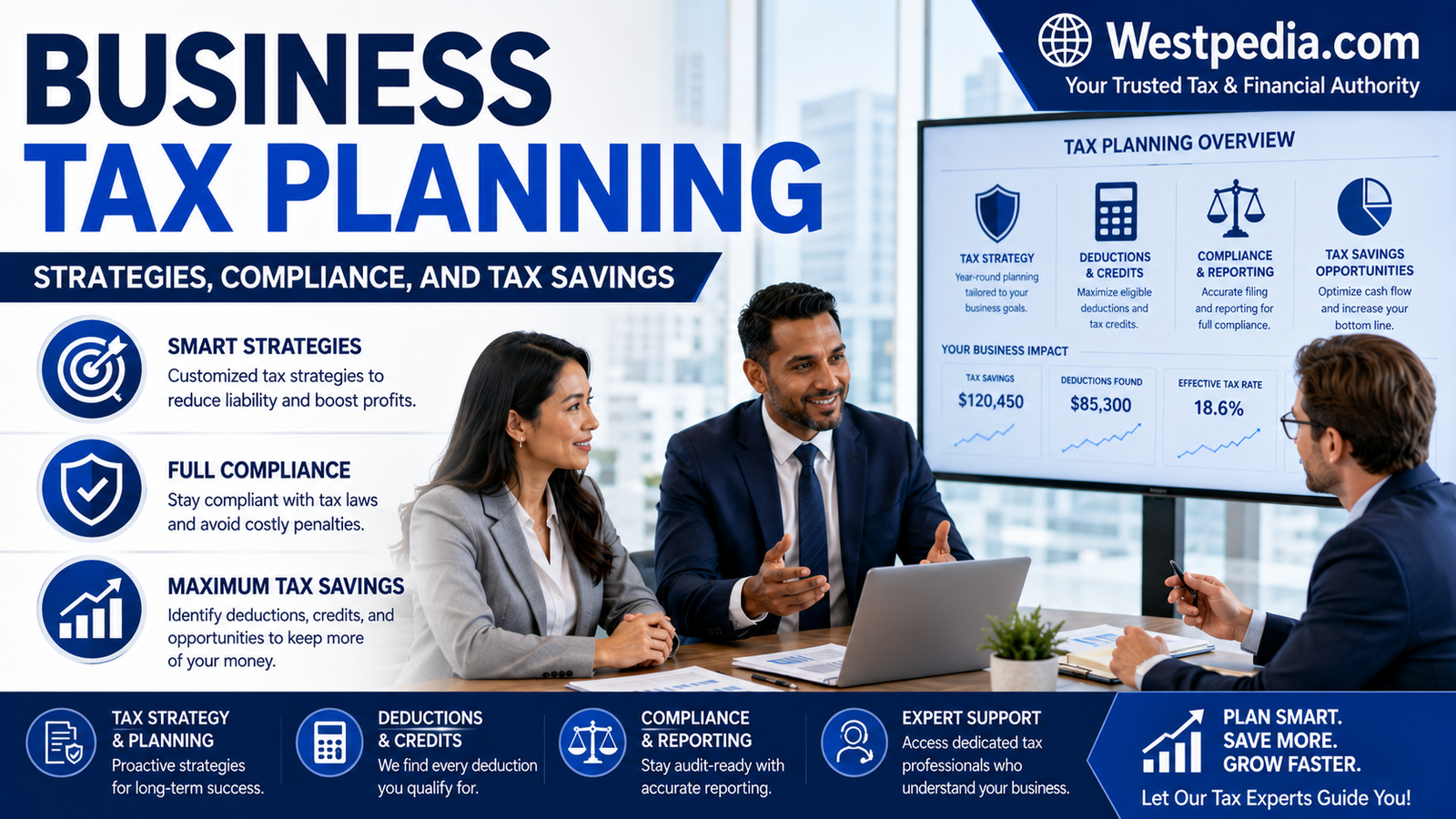
Business tax planning is the ongoing process of analyzing business income, expenses, investments, entity structure, and tax obligations to legally manage tax liabilities and improve financial efficiency. Rather than focusing solely on tax filing season, effective tax planning occurs throughout the year and helps businesses make informed operational and financial decisions.
Whether you operate as a sole proprietor, freelancer, LLC, partnership, S corporation, or C corporation, business tax planning can help identify potential deductions, credits, deferrals, and compliance requirements while reducing the risk of reporting errors.
This guide explains how business tax planning works, who it affects, available tax-saving opportunities, compliance responsibilities, filing considerations, and common mistakes businesses should avoid.
What Is Business Tax Planning?
Business tax planning involves evaluating current and future business activities to understand their tax consequences. The goal is not tax avoidance, but lawful tax efficiency through proper reporting, documentation, timing, and strategic decision-making. Many businesses also rely on Tax Refund Services to help ensure accurate filings and maximize eligible returns, while comparing Best Investment Platforms to align surplus funds with their long-term financial goals.
Business tax planning typically includes:
- Managing taxable income
- Tracking deductible expenses
- Evaluating tax credits
- Planning estimated tax payments
- Selecting appropriate business structures
- Managing payroll tax obligations
- Preparing for filing deadlines
- Maintaining supporting records
The Taxpayer Problem Business Tax Planning Addresses
Many businesses face challenges such as:
- Unexpected tax liabilities
- Cash flow disruptions from tax payments
- Missed deductions and credits
- Poor recordkeeping practices
- Complex reporting obligations
- Changing tax regulations
- Multi-state tax considerations
Without proactive planning, businesses may experience compliance issues, penalties, filing errors, or missed opportunities to improve tax efficiency.
Who Is Affected by Business Tax Planning?
- Self-employed individuals
- Freelancers and contractors
- Small business owners
- LLC members
- Partnership owners
- S corporation shareholders
- C corporation executives
- Real estate investors
- Business investors
- Family-owned businesses
How Business Tax Planning Works
In simple terms, business tax planning helps taxpayers estimate tax obligations before filing returns. This allows businesses to make informed decisions regarding expenses, investments, hiring, compensation, and cash flow management.
From a technical perspective, tax planning involves analyzing taxable income, timing differences, allowable deductions, tax credits, depreciation methods, entity-specific rules, and reporting requirements.
Eligibility Requirements for Business Tax Planning Opportunities
| Requirement | Details |
|---|---|
| Business Activity | Must operate a legitimate income-producing business activity. |
| Income Reporting | Business income must be accurately reported. |
| Expense Documentation | Supporting records are generally required for deductions. |
| Entity Compliance | Businesses must comply with applicable entity rules. |
| Tax Filings | Required returns and reports must be submitted. |
| Record Retention | Adequate records should be maintained for verification purposes. |
Eligible, Partially Eligible, and Ineligible Taxpayers
Eligible Taxpayers
- Active business owners
- Self-employed individuals
- Partnerships
- LLCs
- S corporations
- C corporations
Partially Eligible Taxpayers
- Businesses with limited qualifying expenses
- Part-time business operators
- Seasonal businesses
Potentially Ineligible Situations
- Personal expenses improperly classified as business expenses
- Activities lacking a genuine profit motive
- Insufficient documentation to support tax positions
Business Tax Savings Opportunities
Business tax planning often focuses on legally available tax benefits such as:
- Ordinary and necessary business expense deductions
- Depreciation deductions
- Retirement plan contributions
- Business tax credits
- Health insurance deductions where permitted
- Qualified business income deductions where applicable
- Research and development incentives
- Energy-efficiency incentives
Qualification requirements vary, and businesses should maintain documentation supporting all claimed benefits.
Deductions vs Credits
| Feature | Deduction | Credit |
|---|---|---|
| Primary Function | Reduces taxable income | Reduces tax liability directly |
| Potential Impact | Depends on tax rate | Often dollar-for-dollar benefit |
| Eligibility Rules | Deduction-specific | Credit-specific |
| Documentation | Generally required | Generally required |
| Business Use | Commonly used | Available in certain situations |
Business Entity Structure and Tax Planning
Entity selection can significantly influence taxation.
| Entity Type | General Tax Consideration |
|---|---|
| Sole Proprietorship | Income typically reported on the owner’s tax return. |
| Partnership | Income generally passes through to partners. |
| LLC | Tax treatment depends on elections and ownership structure. |
| S Corporation | May offer different compensation and pass-through considerations. |
| C Corporation | Separate taxable entity with corporate tax obligations. |
The optimal structure depends on business goals, ownership arrangements, income levels, compliance costs, and long-term planning objectives.
Tax Impact Examples
| Scenario | Potential Outcome |
|---|---|
| Business tracks deductible expenses consistently | More accurate deduction reporting. |
| Owner underestimates tax liability | Possible cash flow strain and penalties. |
| Business contributes to retirement plan | Potential tax benefits and retirement savings. |
| Capital equipment purchase | May qualify for depreciation deductions. |
| Incomplete documentation | Deductions may be challenged or reduced. |
Example Tax Planning Calculation
Educational Example Only
A business generates:
- $300,000 gross revenue
- $180,000 deductible business expenses
Estimated taxable business income:
$300,000 − $180,000 = $120,000
If additional eligible deductions, depreciation, or credits apply, taxable income or tax liability may change. Actual outcomes depend on specific facts, applicable laws, and documentation.
Business Expense Deduction Categories
Common deductible business expenses may include:
- Office expenses
- Advertising and marketing
- Professional services
- Insurance premiums
- Employee compensation
- Business travel
- Equipment purchases
- Technology expenses
- Training and education
- Rent and utilities
Only expenses that meet applicable tax requirements should be claimed.
Estimated Taxes and Cash Flow Planning
Many business owners must make estimated tax payments throughout the year.
Planning considerations include:
- Projected annual income
- Expected deductions
- Prior-year tax obligations
- Seasonal fluctuations
- Cash reserve management
Underpayment may result in additional tax costs or penalties.
Payroll Tax Considerations
Businesses with employees may face payroll-related obligations such as:
- Withholding responsibilities
- Payroll tax deposits
- Information reporting requirements
- Employee classification compliance
- Benefits reporting obligations
Payroll compliance should be integrated into overall tax planning efforts.
Investment and Capital Gains Tax Considerations
Businesses holding investments or selling assets should consider:
- Capital gains reporting
- Capital loss limitations
- Dividend income treatment
- Asset disposition planning
- Tax-loss harvesting concepts where applicable
Investment-related tax consequences may influence timing and financial planning decisions.
Retirement Tax Planning for Business Owners
Retirement planning often plays an important role in business tax strategy.
- Traditional retirement arrangements
- Roth retirement arrangements
- Employer-sponsored plans
- Owner-only retirement plans
- Contribution planning
Contribution limits and tax treatment vary depending on the plan structure.
Compliance Requirements
Business tax planning must always support compliance with applicable tax laws.
Common Filing Obligations
- Income tax returns
- Information returns
- Payroll tax reports
- Estimated tax filings
- State and local tax filings
Documentation Requirements
- Receipts
- Invoices
- Bank statements
- Payroll records
- Asset purchase documentation
- Accounting records
Record Retention Considerations
Businesses should maintain organized records that support reported income, expenses, deductions, credits, and tax positions.
Tax Deadlines and Timing Considerations
Tax planning is most effective when performed year-round rather than shortly before filing deadlines.
Business owners should monitor:
- Income tax filing deadlines
- Estimated payment schedules
- Payroll reporting timelines
- Extension opportunities
- Retirement contribution deadlines
Specific deadlines vary and should be verified through official tax authority guidance.
Software and Service Comparison
| Provider | Best For | Pricing Level | Complexity |
|---|---|---|---|
| TurboTax | Guided business filing | Higher | Moderate to advanced |
| H&R Block | Professional support options | Moderate to higher | Moderate to advanced |
| TaxAct | Cost-conscious businesses | Moderate | Moderate |
| FreeTaxUSA | Simpler filing situations | Lower | Basic to moderate |
| Cash App Taxes | Eligible simpler returns | Lower | Basic |
How to Evaluate Tax Software
- Business return support
- Entity-specific capabilities
- State filing options
- Professional assistance availability
- Audit support resources
- Reporting complexity support
Risk and Audit Considerations
Common business tax mistakes include:
- Mixing personal and business expenses
- Missing income reporting
- Inadequate recordkeeping
- Misclassification of workers
- Unsupported deductions
- Payroll reporting errors
Maintaining accurate documentation and consistent accounting practices can help reduce compliance risks.
State and Local Tax Considerations
State and local tax laws vary significantly by jurisdiction.
Businesses may encounter:
- State income taxes
- Sales taxes
- Franchise taxes
- Gross receipts taxes
- Local business taxes
- Registration requirements
Businesses should verify applicable state and local obligations independently.
Frequently Asked Questions
1. What is business tax planning?
It is the process of organizing business finances and transactions to improve tax efficiency while remaining compliant.
2. Who benefits from business tax planning?
Business owners, freelancers, self-employed individuals, LLCs, partnerships, and corporations may benefit.
3. Is business tax planning legal?
Yes. Tax planning involves lawful strategies permitted under tax laws.
4. What is the difference between tax planning and tax avoidance?
Tax planning uses legal methods, while improper tax avoidance may violate tax laws.
5. Can deductions reduce business taxes?
Eligible deductions may reduce taxable income.
6. Do tax credits provide greater value than deductions?
Credits often directly reduce tax liability, but eligibility varies.
7. Why are estimated taxes important?
They help businesses meet tax obligations throughout the year.
8. What records should businesses keep?
Income records, receipts, invoices, payroll records, and accounting documentation.
9. How often should tax planning be reviewed?
Many businesses review tax planning strategies throughout the year.
10. Can software help with business tax planning?
Many tax software platforms provide planning and filing support tools.
11. What role does entity structure play?
Entity structure can affect taxation, reporting requirements, and planning opportunities.
12. Are retirement contributions part of tax planning?
Yes. Retirement plans may provide tax and financial planning benefits.
13. Can state taxes affect business planning?
Yes. State and local tax obligations can significantly impact planning decisions.
14. Does business tax planning guarantee tax savings?
No. Outcomes depend on facts, circumstances, eligibility, and changing tax laws.
15. Should businesses consult tax professionals?
Complex situations may warrant professional tax advice and review.
Related Topics
- Small Business Taxes
- Estimated Tax Payments
- Business Tax Deductions
- Payroll Tax Compliance
- LLC Taxation
- S Corporation Taxes
- Business Tax Credits
- Tax Filing Deadlines
- Capital Gains Tax for Businesses
- Retirement Planning for Business Owners
Important Regulatory Disclosure
This article is provided for educational purposes only and does not constitute tax, accounting, legal, or financial advice. Tax laws change frequently, and individual circumstances vary. Businesses should consult official government guidance and qualified tax professionals when evaluating tax planning strategies, filing obligations, deductions, credits, entity structures, or compliance requirements.