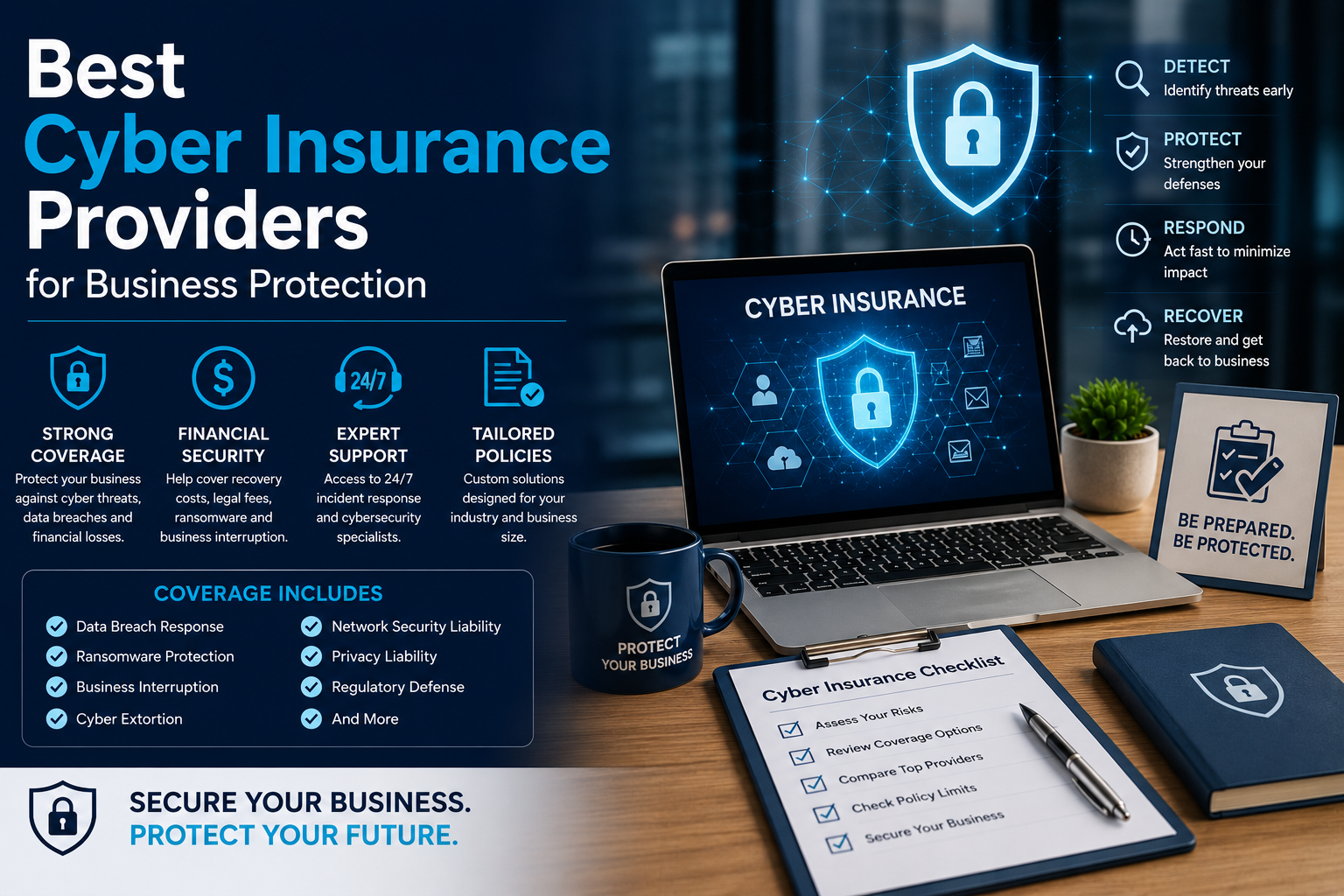
The best cyber insurance providers offer comprehensive protection against data breaches, ransomware attacks, business interruption losses, and cyber liability claims. Leading insurers combine broad coverage, strong claims support, risk management services, and cybersecurity resources to help businesses manage evolving digital threats. Comparing providers allows organizations to choose policies that align with their operational risks and cybersecurity requirements.
Best Cyber Insurance Providers: Compare Coverage, Costs & Features
Cyber threats continue to evolve, making cyber insurance an increasingly important component of business risk management. From ransomware attacks and data breaches to business email compromise and regulatory investigations, cyber incidents can create significant financial and operational challenges.
Selecting the right cyber insurer requires more than comparing premiums. Businesses should evaluate coverage breadth, claims capabilities, cybersecurity services, exclusions, and industry expertise before purchasing a policy. Reviewing the Best Business Insurance Companies can help organizations identify providers that offer comprehensive protection, strong claims support, and tailored coverage for evolving cyber risks.
How We Evaluated Cyber Insurance Providers
Providers were assessed using several key criteria:
- Coverage breadth
- Financial strength
- Claims handling capabilities
- Cyber risk management resources
- Incident response services
- Industry specialization
- Policy customization options
- Pricing competitiveness
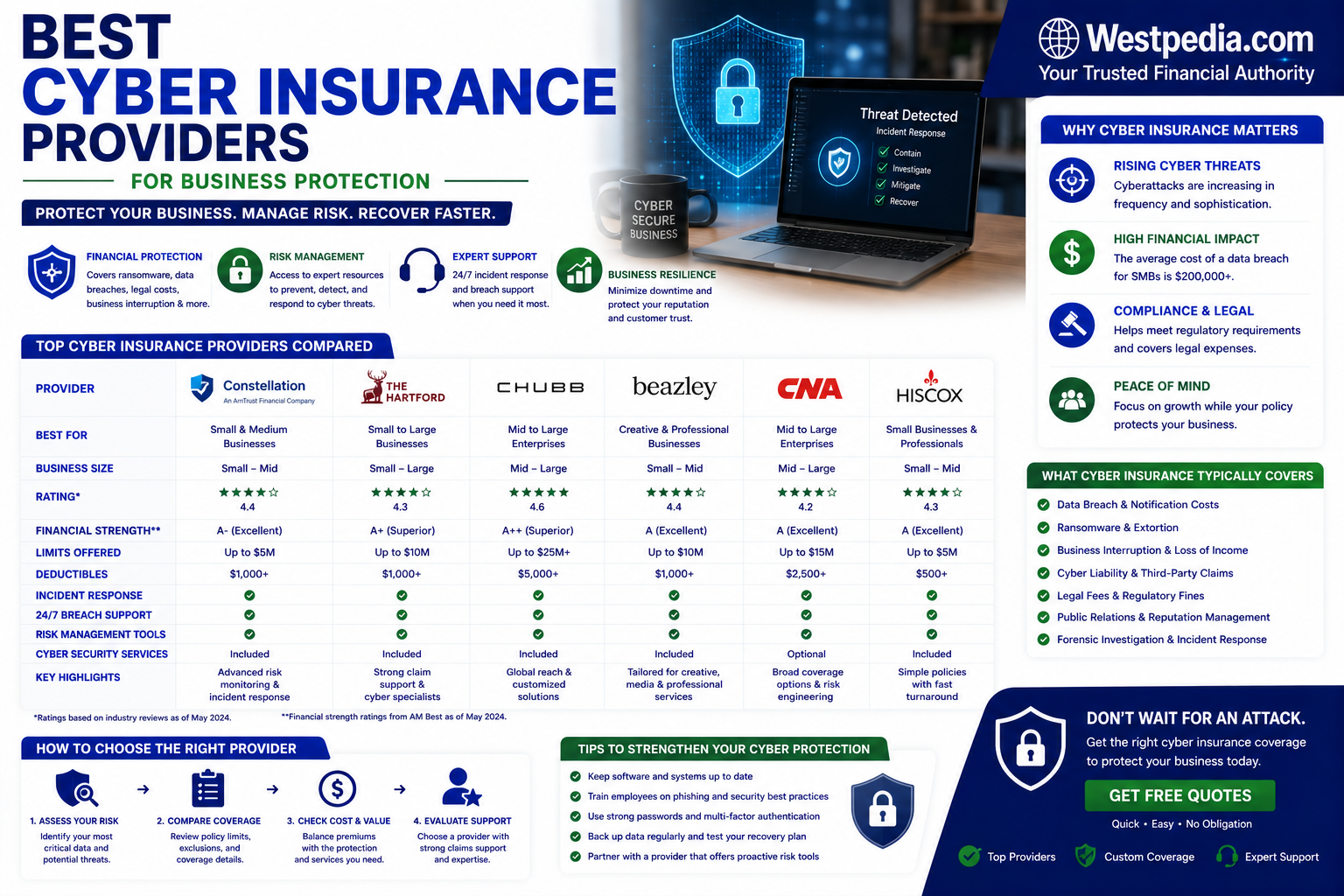
Top Cyber Insurance Providers Compared
| Provider | Best For | Key Strengths | Pricing Position | Potential Limitations |
|---|---|---|---|---|
| Chubb | Large organizations | Broad cyber coverage and global capabilities | Premium | Higher premiums for some businesses |
| Travelers | Small and midsize businesses | Comprehensive cyber solutions | Mid-range | Coverage availability may vary |
| Hiscox | Small businesses | Flexible online policies | Competitive | Coverage limits may be lower |
| Coalition | Cyber-focused protection | Integrated cybersecurity tools | Mid-range | Industry eligibility varies |
| AXA XL | Complex enterprise risks | Advanced cyber expertise | Premium | May require broker assistance |
What Cyber Insurance Typically Covers
| Coverage Type | Protection Provided | Common Claims Examples |
|---|---|---|
| Data Breach Response | Notification and remediation expenses | Customer data exposure |
| Ransomware Coverage | Ransom payments and recovery costs | Malware attacks |
| Business Interruption | Lost income after cyber incidents | Network shutdowns |
| Cyber Liability | Third-party legal claims | Privacy lawsuits |
| Digital Asset Restoration | Data and system recovery | Corrupted databases |
| Incident Response Services | Forensics and crisis management | Security breach investigations |
Chubb
Chubb is recognized for serving organizations with sophisticated cyber risk exposures and international operations.
Strengths
- Broad cyber coverage options
- Strong global capabilities
- Extensive claims expertise
- Specialized cyber risk services
Potential Limitations
- Premium costs may exceed some small business budgets.
Travelers
Travelers provides cyber coverage for organizations ranging from small businesses to large enterprises.
Strengths
- Comprehensive cyber policy options
- Strong risk management resources
- Broad industry appetite
Potential Limitations
- Coverage features vary by policy and state.
Hiscox
Hiscox offers cyber coverage designed primarily for smaller organizations and professional service firms.
Strengths
- User-friendly online experience
- Flexible policy options
- Competitive pricing for smaller businesses
Potential Limitations
- Some larger organizations may require higher coverage limits.
Coalition
Coalition combines insurance protection with proactive cybersecurity monitoring and incident prevention services.
Strengths
- Cybersecurity tools included
- Continuous risk monitoring
- Specialized cyber expertise
Potential Limitations
- Eligibility requirements may vary by industry and security posture.
AXA XL
AXA XL focuses on complex cyber risks faced by larger organizations and multinational businesses.
Strengths
- Advanced cyber underwriting expertise
- Customized policy structures
- Global claims support
Potential Limitations
- Coverage procurement often requires broker involvement.
How Much Does Cyber Insurance Cost?
Cyber insurance premiums vary considerably depending on company size, industry, and cybersecurity maturity.
| Business Profile | Estimated Annual Premium Range | Risk Level |
|---|---|---|
| Small Professional Firm | $500–$2,500+ | Low to Moderate |
| Retail Business | $1,000–$5,000+ | Moderate |
| Healthcare Organization | $5,000–$50,000+ | High |
| Large Enterprise | $25,000–$500,000+ | Very High |
Factors That Affect Cyber Insurance Premiums
- Industry sector
- Annual revenue
- Data volume stored
- Cybersecurity controls
- Claims history
- Multi-factor authentication usage
- Employee cybersecurity training
- Third-party vendor exposure
- Coverage limits selected
- Regulatory environment
How Insurers Underwrite Cyber Risks
Cyber insurers typically assess:
- Network security architecture
- Endpoint protection systems
- Backup procedures
- Incident response planning
- Patch management practices
- Access control policies
- Data encryption standards
- Employee security awareness programs
How the Claims Process Works
- Report the cyber incident immediately.
- Engage approved incident response resources.
- Document affected systems and losses.
- Forensic investigators assess the event.
- The insurer evaluates covered expenses.
- Settlement is issued for covered losses.
How to Lower Cyber Insurance Costs
- Implement multi-factor authentication.
- Conduct employee cybersecurity training.
- Maintain offline backups.
- Deploy endpoint detection tools.
- Update software regularly.
- Perform vulnerability assessments.
- Develop an incident response plan.
Common Mistakes Businesses Make
- Assuming general liability covers cyber incidents.
- Ignoring ransomware exposure.
- Underestimating business interruption risks.
- Failing to review policy exclusions.
- Neglecting cybersecurity controls.
- Purchasing insufficient limits.
Expert Considerations Before Buying
Organizations should assess data sensitivity, regulatory obligations, operational dependencies, vendor relationships, and incident response capabilities before selecting a cyber insurance provider.
Businesses should also compare coverage triggers, exclusions, sublimits, and insurer-provided cybersecurity services.
Frequently Asked Questions
1. What does cyber insurance cover?
Coverage may include data breaches, ransomware, legal expenses, business interruption losses, and incident response costs.
2. Which businesses need cyber insurance?
Any organization that stores, processes, or transmits digital information should evaluate cyber coverage.
3. How much cyber insurance do businesses need?
Coverage requirements depend on revenue, data exposure, industry regulations, and risk tolerance.
4. Does cyber insurance cover ransomware?
Many policies provide ransomware coverage, subject to policy terms and conditions.
5. Is cyber insurance legally required?
Cyber insurance is generally not legally required, although contractual obligations may exist.
6. Can small businesses buy cyber insurance?
Yes. Many insurers offer products specifically designed for small businesses.
7. What affects cyber insurance pricing?
Cybersecurity controls, industry, claims history, and data exposure significantly influence premiums.
8. Do insurers require security controls?
Many insurers require specific cybersecurity measures, such as multi-factor authentication.
9. How quickly should cyber incidents be reported?
Businesses should notify their insurer immediately after discovering a cyber event.
10. Are all cyber incidents covered?
Coverage depends on policy language, exclusions, and incident circumstances.
Related Topics
- Cyber Liability Insurance
- Business Insurance
- Data Breach Insurance
- Professional Liability Insurance
- Risk Management Strategies