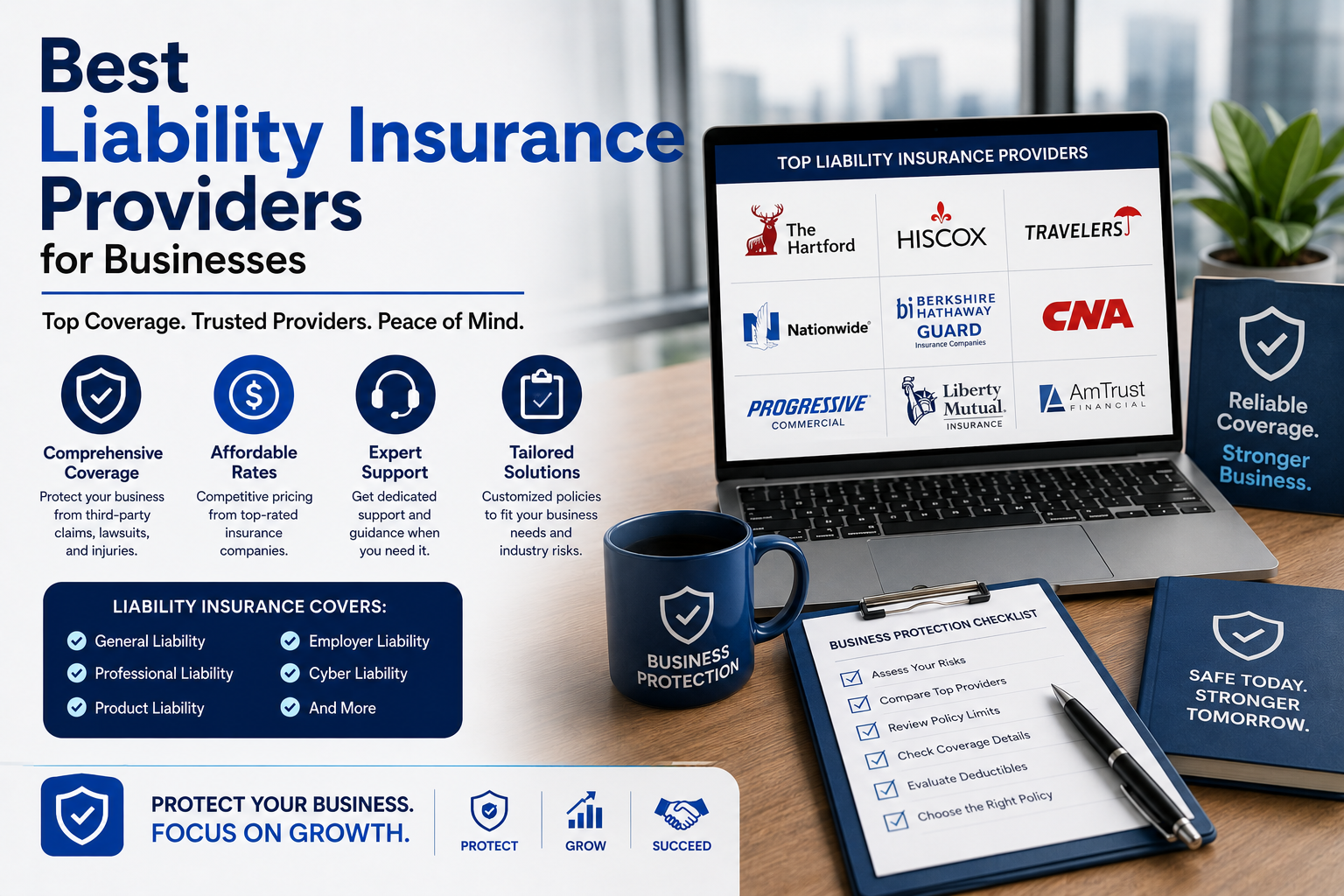
The best liability insurance providers offer strong financial stability, broad coverage options, competitive pricing, and dependable claims support. Top insurers help businesses protect against lawsuits, bodily injury claims, property damage, and professional errors. Comparing multiple providers enables business owners to select liability coverage that aligns with their industry risks, budget, and operational needs.
Best Liability Insurance Providers: Compare Coverage, Costs & Features
Liability claims can create significant financial challenges for businesses of every size. A customer injury, property damage incident, advertising dispute, or professional mistake could lead to costly legal expenses and settlements.
Choosing the right liability insurance provider is essential because coverage terms, exclusions, pricing, and claims services vary considerably among insurers. Businesses should compare providers carefully to ensure their policies adequately address their specific risks.
How We Evaluated Liability Insurance Providers
The insurers in this guide were assessed using several important criteria:
- Financial strength and stability
- Coverage breadth
- Claims handling reputation
- Industry specialization
- Policy flexibility
- Pricing competitiveness
- Risk management services
- Customer support accessibility
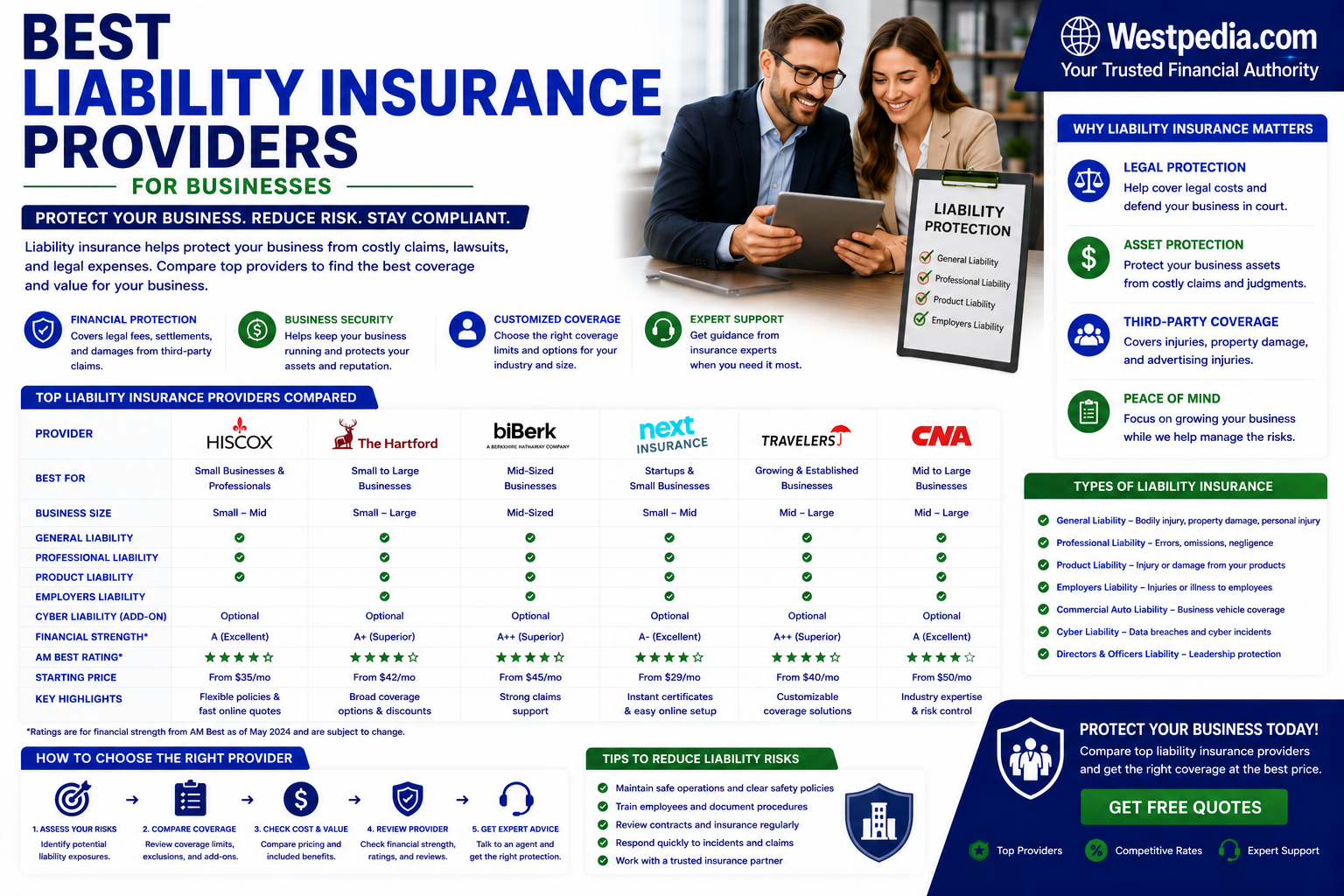
Top Liability Insurance Providers Compared
| Provider | Best For | Coverage Strengths | Pricing Position | Potential Limitations |
|---|---|---|---|---|
| The Hartford | Small businesses | Broad general liability solutions | Competitive | State availability varies |
| Hiscox | Professional services | Professional liability expertise | Competitive | Limited appetite for some high-risk industries |
| Travelers | Growing businesses | Extensive commercial coverage portfolio | Mid-range | Online policy options vary |
| Chubb | Complex business risks | Customized liability solutions | Premium | Higher premiums for some organizations |
| Progressive Commercial | Businesses with vehicles | Commercial auto liability expertise | Competitive | Non-auto liability offerings vary |
Types of Liability Coverage Businesses Should Consider
| Coverage Type | Protection Provided | Who Typically Needs It |
|---|---|---|
| General Liability Insurance | Third-party bodily injury and property damage claims | Most businesses |
| Professional Liability Insurance | Errors, omissions, and negligence claims | Consultants and service firms |
| Cyber Liability Insurance | Data breaches and cyber incidents | Businesses handling digital data |
| Product Liability Insurance | Claims involving products sold or manufactured | Manufacturers and retailers |
| Employment Practices Liability | Employee-related legal claims | Businesses with employees |
| Commercial Auto Liability | Vehicle-related liability claims | Businesses using vehicles |
The Hartford
The Hartford is widely recognized for serving small and midsize businesses through comprehensive liability policies and business owner’s packages.
Strengths
- Strong small business focus
- Broad liability coverage options
- Risk management resources
- Flexible package policies
Potential Limitations
- Coverage availability may differ by state.
Hiscox
Hiscox specializes in liability protection for consultants, freelancers, and professional service organizations.
Strengths
- Professional liability expertise
- Flexible online policy management
- Competitive pricing for service businesses
Potential Limitations
- Some high-risk industries may face underwriting restrictions.
Travelers
Travelers offers one of the industry’s broadest commercial insurance portfolios, serving businesses across numerous sectors.
Strengths
- Extensive liability offerings
- Strong claims infrastructure
- Broad industry appetite
Potential Limitations
- Certain specialized coverages may require agent assistance.
Chubb
Chubb is often selected by larger organizations and companies with sophisticated liability exposures.
Strengths
- Customized policy structures
- Global insurance capabilities
- Strong financial ratings
Potential Limitations
- Premium pricing may exceed some small business budgets.
Progressive Commercial
Progressive Commercial is particularly strong in commercial auto liability and transportation-related risks.
Strengths
- Commercial vehicle expertise
- Competitive commercial auto pricing
- Flexible fleet solutions
Potential Limitations
- Broader liability offerings may vary by business type.
How Much Does Liability Insurance Cost?
Liability insurance premiums depend heavily on industry risk, operations, claims history, and coverage limits.
| Business Type | Estimated Monthly Premium Range | Risk Level |
|---|---|---|
| Consultant or Freelancer | $25–$100+ | Low |
| Retail Store | $40–$200+ | Moderate |
| Restaurant | $100–$500+ | High |
| Construction Business | $250–$2,500+ | Very High |
Factors That Affect Liability Insurance Premiums
- Industry classification (NAICS)
- Business revenue
- Employee count
- Claims history
- Coverage limits selected
- Deductible amount
- Location and state regulations
- Operational risks
- Contract requirements
- Safety procedures
How Insurers Evaluate Liability Risks
During underwriting, insurers commonly assess:
- Business operations
- Annual revenue
- Number of employees
- Industry risk exposure
- Historical losses
- Safety compliance programs
- Use of subcontractors
- Customer interaction frequency
How the Claims Process Works
- Report the incident promptly.
- Document damages, injuries, and circumstances.
- Provide evidence and supporting records.
- An adjuster investigates the claim.
- The insurer evaluates policy coverage.
- Covered claims proceed to settlement or defense.
How to Reduce Liability Insurance Costs
- Implement documented safety programs.
- Provide regular employee training.
- Maintain accurate contracts and records.
- Increase deductibles when financially appropriate.
- Bundle multiple coverages.
- Review policies annually.
- Strengthen cybersecurity practices.
Common Mistakes Businesses Make
- Buying insufficient coverage limits.
- Selecting policies solely based on price.
- Ignoring policy exclusions.
- Failing to update coverage as the business grows.
- Overlooking professional liability exposures.
- Not reviewing contracts requiring additional insured endorsements.
Expert Considerations Before Purchasing Coverage
Businesses should identify operational risks, review contractual obligations, estimate potential legal exposures, and compare multiple insurers before selecting a liability insurance provider.
Coverage should reflect both current operations and anticipated future growth.
Frequently Asked Questions
1. What does liability insurance cover?
Coverage typically includes bodily injury, property damage, legal defense costs, and certain liability-related claims.
2. Which businesses need liability insurance?
Nearly all businesses should evaluate liability coverage because lawsuits can affect organizations of any size.
3. How much liability insurance should a business carry?
Coverage needs depend on industry risks, contracts, assets, and overall exposure.
4. Is liability insurance legally required?
Requirements vary by industry, state regulations, and contractual obligations.
5. What is excluded from liability insurance?
Intentional acts, fraud, and certain specialized risks are commonly excluded.
6. Does general liability cover professional mistakes?
No. Professional liability insurance generally addresses errors and omissions claims.
7. Can small businesses afford liability insurance?
Many insurers offer affordable policies tailored to small business risks.
8. How often should businesses review coverage?
Coverage should be reviewed annually and after significant operational changes.
9. Can businesses bundle liability coverage?
Yes. Many insurers offer bundled policies such as business owner’s policies (BOPs).
10. Should businesses compare multiple providers?
Comparing providers can help businesses identify differences in coverage, exclusions, and pricing.
Related Topics
- Best Cyber Insurance Providers
- Professional Liability Insurance
- Cyber Liability Insurance
- Small Business Insurance
- Business Owner’s Policy (BOP)