
First Time Home Buyer Loan Guide, Rates & Programs. Buying your first home is a major financial milestone, but navigating mortgage options can feel overwhelming. A first-time buyer may encounter unfamiliar terms, strict documentation requirements, and multiple financing programs.
Fortunately, several mortgage programs are specifically designed to help new buyers achieve homeownership. These loans often provide lower down payment requirements, flexible qualification standards, and access to assistance programs that can reduce upfront costs.
What Is a First Time Home Buyer Loan?
A First Time Home Buyer Loan is a mortgage program intended for individuals purchasing their first primary residence. In many cases, borrowers may still qualify even if they have not owned a home within the previous three years.
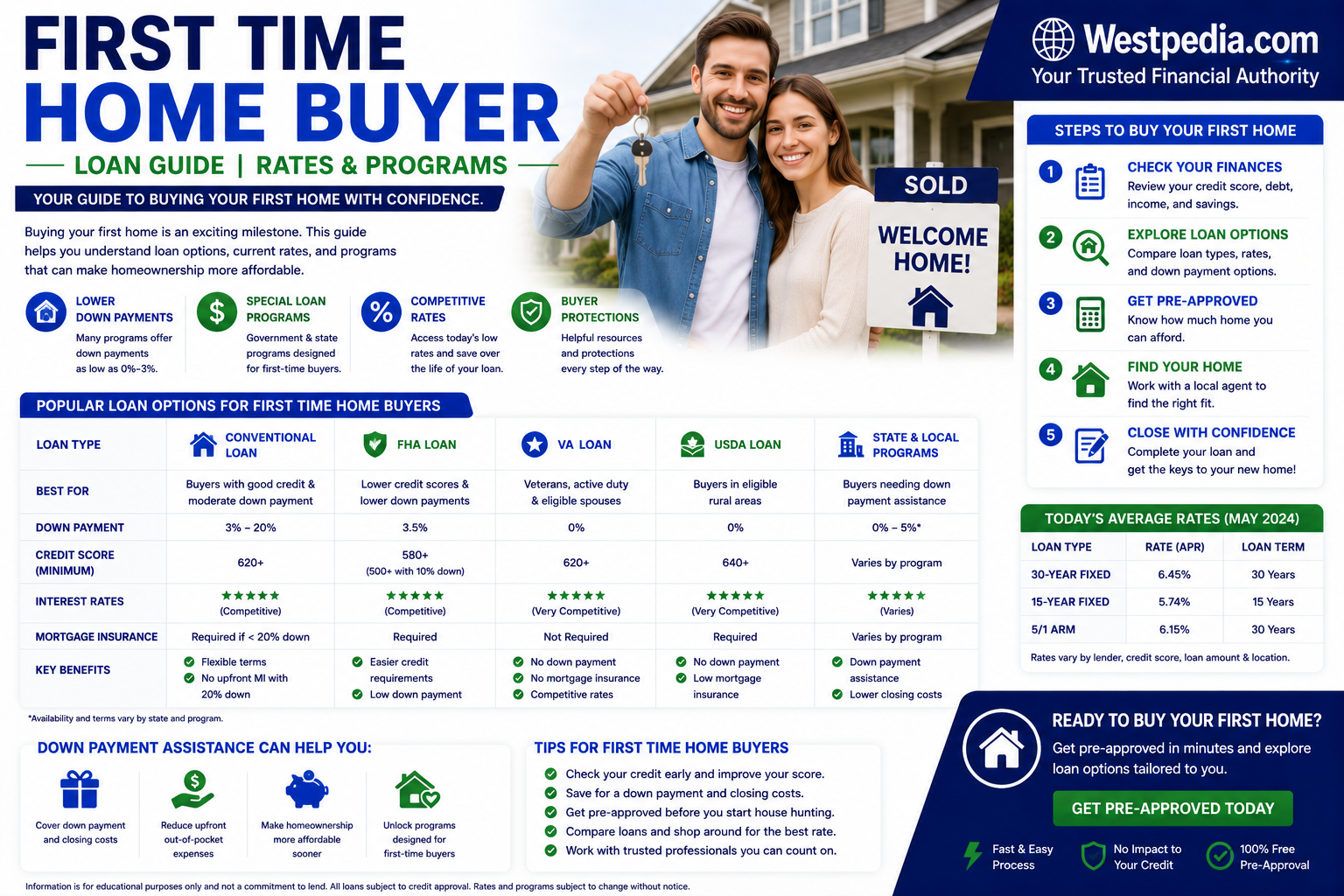
Common first-time buyer mortgage options include:
- Conventional loans
- FHA loans
- VA loans
- USDA loans
- State and local assistance programs
- Down payment assistance loans
Who Should Consider This Loan?
- Renters purchasing their first home
- Young professionals
- Recently married couples
- Moderate-income households
- Buyers with limited savings for a down payment
- Individuals re-entering homeownership after several years
What Financial Problem Does It Solve?
Homeownership often requires significant upfront cash and strict credit qualifications. First-time buyer programs help address:
- Limited down payment savings
- High home purchase prices
- Closing cost challenges
- Limited credit history
- Affordability concerns
Typical Mortgage Costs, Rates & Terms
| Feature | Typical Range |
|---|---|
| Loan Amount | $75,000 – Conforming Loan Limits |
| APR | 5.5% – 8.5% |
| Down Payment | 0% – 20% |
| Loan Term | 15 – 30 Years |
| Closing Costs | 2% – 6% of Loan Amount |
| Funding Timeline | 30 – 60 Days |
First-Time Buyer Loan Programs Compared
| Loan Type | Minimum Down Payment | Best For | Credit Flexibility |
|---|---|---|---|
| Conventional Loan | 3% | Strong Credit Borrowers | Moderate |
| FHA Loan | 3.5% | Lower Credit Scores | High |
| VA Loan | 0% | Eligible Veterans | High |
| USDA Loan | 0% | Rural Homebuyers | Moderate |
| Down Payment Assistance Programs | Varies | Limited Savings | Varies |
Estimated Monthly Payments
| Loan Amount | APR | Term | Approximate Monthly Payment |
|---|---|---|---|
| $250,000 | 6.5% | 30 Years | $1,580 |
| $350,000 | 6.5% | 30 Years | $2,212 |
| $500,000 | 6.25% | 30 Years | $3,078 |
Major Mortgage Lenders Compared
| Lender | Best For | Strengths | Potential Limitations |
|---|---|---|---|
| Bank of America | Relationship Banking | National Mortgage Programs | Stricter Underwriting |
| Wells Fargo | Existing Customers | Large Mortgage Platform | Documentation Intensive |
| Chase | Digital Mortgage Experience | Broad Product Selection | Competitive Standards |
| U.S. Bank | Conventional Mortgages | Multiple Program Options | Regional Variations |
| SoFi | Online Borrowers | Digital Application Process | Eligibility Requirements May Vary |
How Lenders Evaluate First-Time Buyers
- Credit score
- Payment history
- Debt-to-income ratio (DTI)
- Employment history
- Income verification
- Cash reserves
- Down payment amount
- Property appraisal results
Typical Credit Score Requirements
- Conventional: Often 620+
- FHA: Often 580+ with minimum down payment
- VA: Varies by lender
- USDA: Varies by lender
Mortgage Application Process
1. Prequalification
Estimate affordability and borrowing capacity.
2. Mortgage Preapproval
Submit income, asset, and credit documentation.
3. Home Search
Work with a real estate professional to identify suitable properties.
4. Formal Application
Apply after signing a purchase agreement.
5. Underwriting Review
The lender evaluates borrower qualifications and property details.
6. Appraisal & Final Approval
The property must generally meet lender requirements.
7. Closing
Review documents, pay required closing costs, and finalize ownership.
How to Improve Approval Odds
- Improve your credit score before applying.
- Reduce existing debt balances.
- Save for a larger down payment.
- Avoid opening new credit accounts.
- Maintain stable employment.
- Build emergency savings reserves.
Responsible Borrowing Considerations
- Purchase a home within your budget.
- Consider maintenance and property taxes.
- Avoid maximizing your borrowing limit.
- Maintain adequate emergency savings.
Potential Risks
- Housing market fluctuations
- Unexpected maintenance expenses
- Higher monthly obligations
- Private mortgage insurance costs
- Interest rate changes on adjustable-rate loans
State and Local Assistance Programs
Many states, counties, and municipalities offer down payment assistance, grants, or special mortgage programs for eligible buyers. Availability, income limits, and program requirements vary by location.
Frequently Asked Questions
1. What is a first time home buyer loan?
It is a mortgage program designed to help eligible borrowers purchase their first primary residence.
2. Do I need a 20% down payment?
No. Many programs allow significantly lower down payments.
3. Can I qualify with fair credit?
Possibly. FHA and other programs may offer more flexible qualification standards.
4. What is mortgage preapproval?
Preapproval estimates how much a lender may be willing to lend.
5. Are closing costs required?
Yes. Most mortgages include closing costs, although assistance programs may help.
6. Can first-time buyers receive grants?
Some state and local agencies offer grants or assistance programs.
7. How long does mortgage approval take?
Many home loans close within 30 to 60 days.
8. What DTI ratio do lenders prefer?
Requirements vary, but lower debt ratios generally improve approval odds.
9. Is mortgage insurance required?
It may be required depending on loan type and down payment amount.
10. Should I compare multiple lenders?
Yes. Comparing lenders may help identify competitive rates and loan terms.
Related Topics
- FHA Loan Guide
- Conventional Mortgage Guide
- VA Loan Requirements
- USDA Home Loan Guide
- Mortgage Preapproval Process
- Down Payment Assistance Programs